
When our sales team asked me to evaluate prospecting tools back in 2024, I didn't start with features. I started with total cost. That's what I do — I manage our vendor subscriptions, roughly $35,000 a year across 20-odd tools and services.
This comparison came out of a specific question: should we buy Phantombuster's Starter plan, or assemble our own stack with separate scraping tools, cold email software, and an email verification service?
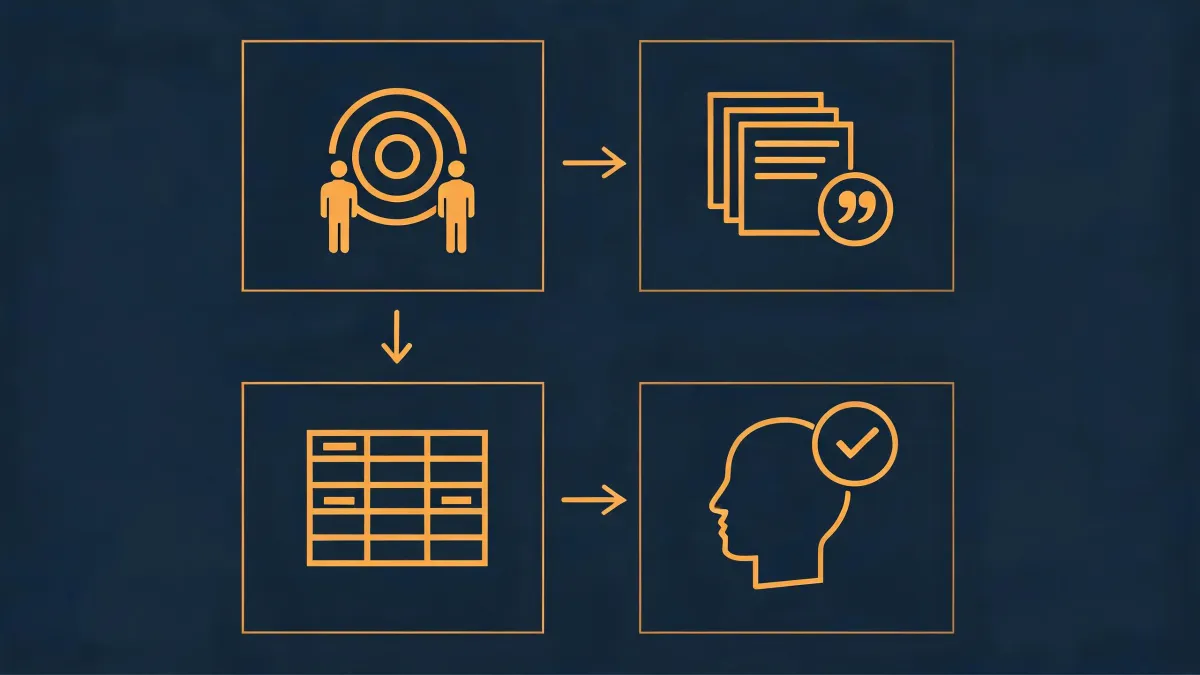
I priced out both options with our operations manager across four dimensions: subscription cost, setup time, data quality, and compliance risk. Here's what we found.
Why I Compared Phantombuster Starter to a DIY Stack
Let me set up the two options, because the comparison only makes sense if both sides are clear.
Option A: Phantombuster Starter. One subscription covering LinkedIn Sales Navigator scraping, the LinkedIn message sender API, an AI email writer, and native integrations with Make, Zapier, and n8n.
Option B: the DIY path. A scraping tool for lead generation, cold email software for sending, a separate email verification service to keep bounce rates down, plus an automation layer to connect the three.
To be fair, both approaches can work. Plenty of teams run strong outbound on each. But the total cost of ownership is very different — and the difference shows up in four places.
The Price Tag: One Subscription vs. Five
Here's the number everyone asks about first.
The Phantombuster Starter plan price is the easiest number to find — it's right on their pricing page. When we checked in early 2025, it was roughly $50/month. I want to say it's a bit less if you pay annually, but don't quote me on that. Either way, it's one line on a budget — about $600/year. Prices change, so verify current rates before you make a decision.
The DIY stack, in comparison, needed:
- A scraping tool: $50–$150/month
- Cold email software: $30–$100/month, depending on send volume
- Email verification: $50–$200/month at real volumes
- An automation layer: $20–$60/month
That added up to roughly $150–$510/month, based on quotes we collected in 2025. The range alone tells the story: three to eight times what Phantombuster Starter costs.
Now, I've learned not to stop at the headline number. In 2022, I approved a vendor because their quote came in $2,000 below the incumbent. They couldn't produce proper invoicing — handwritten receipts, nothing structured. Finance rejected the expense report, and I ended up covering $2,400 out of the department budget. The "cheaper" vendor cost us more. So I applied the same logic here: not just subscription prices, but what each option costs in time, data quality, and risk.
The Setup Time Nobody Quotes
I'm not an engineer. I can't speak to API rate limits or whether one tool's webhook handling is better than another's. What I can tell you from running vendor evaluations is how much setup time each option demands.
Phantombuster's setup took an afternoon. Our ops manager and I installed a LinkedIn Sales Navigator scraper from their automation library, connected it to a Google Sheet, and set up a message-sending flow through the LinkedIn message sender API. No code, no developer involvement. Not everything was perfect on the first try, but we were live the same day.
The DIY stack took two calendar weeks. Two weeks. The actual work was maybe six hours — creating accounts, mapping data fields, building a Zap between the scraper and the email verification service. But six hours stretched across two weeks because every piece speaks its own dialect.
The scraper's custom fields didn't match the verification tool's input format. The verification tool's response logic didn't slot into the cold email software cleanly. We got there eventually. It just wasn't the project we'd planned to spend two weeks on.
There's something satisfying about the afternoon version, I'll admit. Not because the DIY route was impossible, but because — well, time is a cost. It just doesn't show up on an invoice.
Where Email Verification Actually Fits
This is the dimension that changed my thinking. I initially assumed email verification was the last step in the chain: write the email, verify the address, hit send. Buy a verification service, run your list through it, done.
But when we mapped out an agent-native prospecting workflow, verification sits in the middle, not the end:
- Generate leads from LinkedIn Sales Navigator (Phantombuster).
- Verify those emails before they enter the outreach pipeline.
- Draft with an AI email writer.
- Send through cold email software.
- Feed the results back through integrations to enrich the next batch.
Here's the counterintuitive part: most deliverability problems happen before cold email software is even involved. If unverified addresses get into your sending list, your bounce rate climbs, your domain reputation drops, and your email software gets blamed for a data hygiene problem upstream.
Now, Phantombuster doesn't replace email verification — that's not its job. It shortens the distance between the tools that do the verifying and sending. The verification service still verifies. The cold email software still sends. The AI email writer still drafts. Phantombuster's value, in our case, was making the handoffs automatic through Make and Zapier instead of manual.
I have mixed feelings about this, honestly. The DIY approach gives you more control over each piece. If you have a technical person who can maintain the wiring, you might prefer it. More often than not, though, the integrated route is the lower-risk bet.
The Compliance Factor
This is where I'll admit another boundary. I'm not a lawyer, so I can't tell you what LinkedIn's Terms of Service technically permit or which automation patterns cross a line. That's a conversation for your legal team.
What I can tell you, as the person who signs vendor agreements, is that compliance risk scales with the number of vendors you manage. You can keep a DIY stack compliant — absolutely. But now you're responsible for staying current on the scraping tool's terms, the verification service's data practices, and the cold email software's sender requirements. Three separate risk surfaces.
Per FTC guidelines (ftc.gov), marketing claims must be truthful, substantiated, and not misleading. Cold email adds another layer: CAN-SPAM requires accurate sender information and a working opt-out mechanism.
The simpler stack isn't a guarantee of compliance — nothing is. But it's easier to review one vendor's terms than to coordinate three or four.
Which One Should You Pick?
If you're deciding between Phantombuster Starter and a DIY stack, here's my honest conclusion from the spreadsheet.
Choose Phantombuster Starter when:
- Social media scraping is your primary lead source (LinkedIn, Instagram, TikTok, Google Maps).
- You want the LinkedIn message sender API and AI email writer without building a pipeline between tools.
- You're comfortable wiring verification into the flow — it's a well-trodden integration path.
- You'd rather deal with one vendor than coordinate four.
Choose the DIY stack when:
- You already own some of the pieces, and switching costs would be high.
- Your send volumes justify dedicated cold email infrastructure — custom sending domains, advanced deliverability features.
- You have someone technical on staff who can maintain integrations.
One more thought: don't assume the cheapest plan is the right plan. The Starter tier works for many teams, but if you have high send volumes or need multiple users, the Plus or Agency tiers change the math. Run the numbers for your situation, not the generic version.
That's the TCO habit I've developed after years of managing vendor relationships: add up the subscription, the setup time, the data quality costs, and the compliance risk. The headline price is where the comparison starts, not where it ends.