
-
What is Phantombuster used for?
-
How much does Phantombuster cost?
-
What is Phantombuster web automation scraping?
-
How does Phantombuster's Instagram comments scraper work?
-
How do you use Phantombuster in an outreach sequence?
-
Is it cheaper to build your own scraper than use Phantombuster?
-
What are contact data providers and when should a B2B sales team use them?
-
What are the hidden costs of Phantombuster?
If you're evaluating Phantombuster as a lead generation tool, you probably have the same questions I had before our first purchase. I'm a procurement manager at a 40-person B2B SaaS company, and I've managed our sales tool budget for six years. This FAQ is based on what I learned from our own workflows, renewals, and one very expensive mistake with a custom scraper.
Here's what we'll cover:
- What is Phantombuster used for?
- How much does Phantombuster cost?
- What is Phantombuster web automation scraping?
- How does Phantombuster's Instagram comments scraper work?
- How do you use Phantombuster in an outreach sequence?
- Is it cheaper to build your own scraper?
- What are contact data providers and when should a B2B sales team use them?
- What are the hidden costs of Phantombuster?
What is Phantombuster used for?
Phantombuster is a no-code web automation platform. You set up a 'phantom' to visit a website, collect public data, and push it to a spreadsheet or API. Sales teams use it to build prospect lists from LinkedIn Sales Navigator, Instagram comments, TikTok hashtags, Google Maps listings, and Facebook groups.
I don't think of it as a contact database. I do not mean that in a bad way—it's a different job. A database gives you clean, structured records. Phantombuster gives you whatever is publicly visible and lets you turn it into a structured list. For B2B sales, that's useful when you need fresh signals, like 'people who commented on a competitor's post,' that no contact database can give you.
The tradeoff is simple: you trade setup time and maintenance time for a repeatable source of targeted leads. That's a good deal if you build lists regularly. It's not 'free data.'
How much does Phantombuster cost?
I don't want to quote a number from memory because pricing changes and your plan depends on usage. I'd start with Phantombuster's pricing page. As of Q4 2024, when I last audited our renewal, the page showed multiple plans with different limits. The right price depends on how many workflows you run and whether you need API access.
The real cost answer, from a total cost of ownership view, is broader than the subscription. You'll likely pair Phantombuster with an enrichment tool (social usernames aren't emails), a CRM or spreadsheet, and your team's time for setup and cleanup. Add those together before you compare it to any other option.
This was accurate as of Q4 2024. The market changes fast, so verify current pricing before you budget.
What is Phantombuster web automation scraping?
Phantombuster web automation scraping is the process of using a phantom to visit a site and extract data for you. Instead of writing a Python script, you configure a workflow visually: choose a source like LinkedIn or Instagram, set your search parameters, and click run. The output lands in a spreadsheet or gets sent to an API.
We use it for a few core workflows: LinkedIn Sales Navigator search results for accounts that match our ICP, Google Maps scrapes for local prospects, and an Instagram comments scraper for campaign research.
The surprise wasn't the scraping power. It was how much maintenance the workflows needed. When LinkedIn changed its interface in 2024, one of our phantoms broke and we didn't notice for a week. That's not a Phantombuster flaw—it's the nature of browser automation. You need to check your workflows regularly.
I'm not going to tell you it's risk-free. Phantombuster doesn't guarantee platform compliance, and I wouldn't expect any scraper to. Read the terms of the sites you use and make your own call.
How does Phantombuster's Instagram comments scraper work?
The Instagram comments scraper takes a public post URL, collects usernames from the comments, and exports them. It's a useful way to find people who are already engaging with a topic, like everyone who commented on an industry event or a relevant influencer's post.
Go in with realistic expectations. In our first test, the scraper captured maybe 85% of the comments on a post with 1,200 comments. Maybe it was closer to 80%, I'd have to check the output file. Pagination and rate limits can create gaps. That's fine for prospecting, but it is not a complete database.
We almost built an entire outbound campaign on one scrape. So glad we ran a small test first. The test showed us how much manual cleaning the output needed, because usernames are not emails, and not every commenter is a buyer.
How do you use Phantombuster in an outreach sequence?
The short answer: use it at the top of your funnel. Phantombuster builds the list. Your outreach sequence—the emails, LinkedIn messages, and follow-ups—still runs in your sales engagement tool.
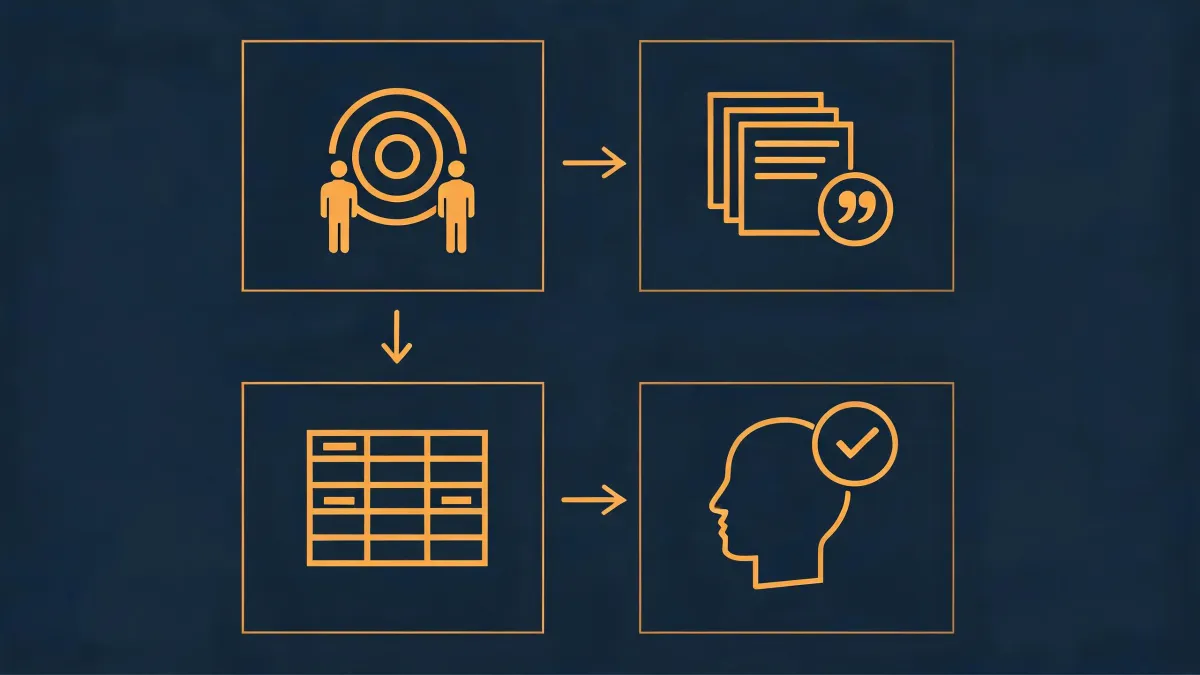
Here's the workflow we've used:
- Create a LinkedIn Sales Navigator search that matches your ideal buyer.
- Run a Phantombuster phantom to scrape those profiles into a spreadsheet.
- Enrich the contacts with email addresses using a separate tool.
- Upload the final list to your sequence tool and start your outreach sequence.
The cost math is straightforward. When I calculated manual research time, our SDRs could produce roughly 50 quality leads per hour. Running the same search through Phantombuster took about 15 minutes of setup plus run time. If you're building lists every week, that time saving is the real ROI.
At least, that's been my experience at our company. If your team is smaller or your niche is narrow, the savings may be less dramatic.
Is it cheaper to build your own scraper than use Phantombuster?
I've heard this from sales leaders more than once: 'Can't we just get a dev to write a scraper?' Maybe. But build-your-own is rarely cheaper when you count the total cost.
In 2023, our dev team quoted me around $4,000 for a custom LinkedIn scraper. Maybe $4,500, I'd have to find the ticket. That quote was only for the initial build. It did not include proxy costs, time spent fixing the scraper after site updates, or the hours wasted when login verification broke.
Phantombuster spreads that development and maintenance cost across all its customers. For a sales team that needs leads, not software, the tool was the lower-TCO option. If you're a software company that wants to sell scraping as a product, build your own. If you're a B2B sales team, buy the tool and keep your engineers focused on your product.
What are contact data providers and when should a B2B sales team use them?
Contact data providers are companies that maintain large, structured databases of B2B contacts. They give you names, work emails, company size, industry, and sometimes intent signals, usually for a subscription or credit-based fee.
Use a contact data provider when you need verified contact details at scale, when you need account intelligence like funding or tech stack, or when you want a provider to handle compliance and opt-out management. For ongoing outbound programs, that structure is worth the price.
Use a scraping tool like Phantombuster when freshness and context matter more than completeness. In Q2 2024, we had two days to launch a campaign around a niche professional event. Contact data providers couldn't build that audience fast enough. We scraped usernames from a relevant post with the Instagram comments scraper and got into the market before the event ended.
In hindsight, I should have started the data provider conversation earlier. But with the CEO waiting on a campaign, scraping was the best call we could make with the time we had.
What are the hidden costs of Phantombuster?
Phantombuster is a solid tool, but the invoice is the smallest line item. Here's the list I use when I present renewal recommendations to our CFO:
- Workflow setup time. The first time you connect LinkedIn Sales Navigator, you'll spend time on login issues and parameter mistakes.
- Data cleaning. Scraped data is messy. You'll need time or another tool to dedupe and verify it.
- Maintenance. When a site changes its layout, your phantom can break.
- Enrichment. Social usernames are not emails. You'll likely pay a second tool for contact details.
- Risk review. Check the terms of the sites you scrape and understand your own compliance position.
Per FTC business guidance (ftc.gov), advertising claims must be truthful, not misleading, and substantiated.
I keep that FTC guidance in mind when I read marketing language like 'no code' or 'automated.' It means the tool removes the hardest technical parts. It does not mean the workflow runs itself with zero supervision. That supervision is part of the total cost.