
-
What exactly does the Phantombuster Sales Navigator scraper do?
-
Is the Phantombuster Sales Navigator scraper safe to use with LinkedIn?
-
What do reviews say about Phantombuster in 2026?
-
Does Phantombuster include a business email finder and email validation API?
-
Why is email validation as important as lead generation?
-
How does LinkedIn lead generation fit into an agent-native prospecting workflow?
-
What should a buying team test before committing to Phantombuster?
I'm the person who buys software for a 140-person B2B sales org, not the person who clicks it all day. I've been managing purchasing since 2020—roughly $120k in annual tech spend across 15 vendors—and I report to both operations and finance. When our RevOps lead asked me to vet Phantombuster for the Sales Navigator scraper, I did what I always do: read reviews, run a small pilot, and ask the questions the sales team didn't want to ask. Here are the answers.
- What exactly does the Phantombuster Sales Navigator scraper do?
- Is the Phantombuster Sales Navigator scraper safe to use with LinkedIn?
- What do reviews say about Phantombuster in 2026?
- Does Phantombuster include a business email finder and email validation API?
- Why is email validation as important as lead generation?
- How does LinkedIn lead generation fit into an agent-native prospecting workflow?
- What should a buying team test before committing to Phantombuster?
What exactly does the Phantombuster Sales Navigator scraper do?
It's a no-code browser automation that takes a LinkedIn Sales Navigator search URL and extracts the results into a structured file. You can schedule it to run on a timer and push the output to Google Sheets, Airtable, or a webhook. At its core, it's a lead extraction engine. Simple. It captures names, titles, companies, LinkedIn URLs, and whatever public profile data is available. It's not an email finder. It does not validate emails. It gives you the raw material, not the finished outbound list. That distinction matters more than most buyers realize.
Is the Phantombuster Sales Navigator scraper safe to use with LinkedIn?
No tool can guarantee LinkedIn compliance, and I'd be lying if I said otherwise. LinkedIn's User Agreement restricts automated scraping; Phantombuster uses your LinkedIn session to run a phantom, which puts you in the gray zone. The practical fix is to use it conservatively: one dedicated LinkedIn account, a low-frequency schedule, and no parallel runs on the same account. We ran our Sales Navigator scraper four hours per day, three days per week. Did it eliminate risk? No. Did it keep us under the radar? So far. Check your company's policy and decide whether the risk is acceptable. And if a vendor tells you 'zero risk,' run the other way.
What do reviews say about Phantombuster in 2026?
Heading into 2026, the reviews for Phantombuster on G2 and Capterra cluster around a few themes. Power users love the speed and flexibility of no-code scraping across LinkedIn, Instagram, TikTok, and Google Maps. They also appreciate the native integrations with Make, Zapier, and n8n. The criticisms are consistent too: setup requires patience, browser-based scripts can break when a site updates, and support tickets can be slow when a Phantom stops mid-run. The general tone is: if you know exactly which URL and filters you need, Phantombuster is excellent. If you expect a one-click 'give me ideal customers' button, you'll be frustrated.
From a buyer's perspective, the review detail worth reading is the one people mention only in the small paragraphs: data freshness. A scraped list from a month ago can already be stale. That's not Phantombuster's fault—it's the nature of social data. It's why you pair a lead generator with a business email finder and an email validation API.
Does Phantombuster include a business email finder and email validation API?
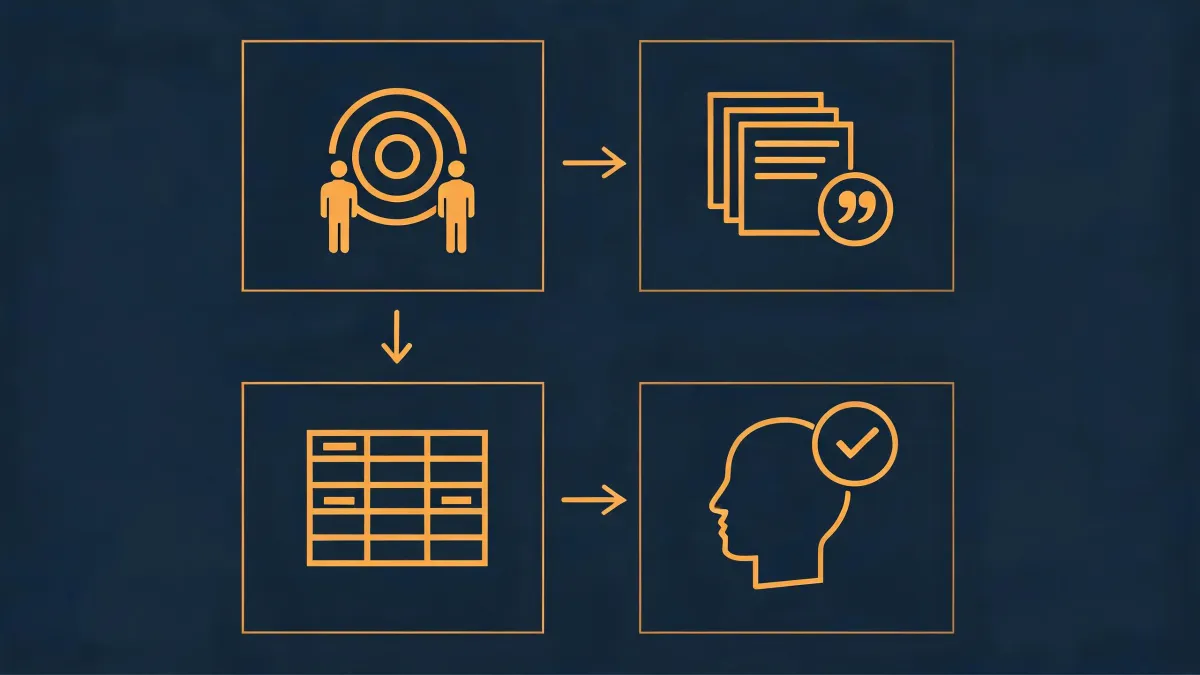
As of the current Phantombuster documentation, the platform is an extractor, not an email enrichment API. Phantombuster is not a business email finder, and it doesn't ship an email validation API. It's the extraction layer. To send an actual outbound sequence, the raw export goes through an enrichment pipeline:
- Phantombuster scrapes Sales Navigator → CSV with names, companies, and LinkedIn URLs.
- A business email finder turns those profiles into guesses or matches, depending on the provider.
- An email validation API checks format, domain, SMTP status, and catch-all patterns.
- Finally, the clean list lands in your CRM or feeds an AI agent's outreach sequence.
This is the step where a lot of buyers underestimate cost. A finder is only as good as the validation that follows it. None of these tools is 100% accurate—anyone who claims that is ignoring how fast email addresses change. Our 2025 pilot found that roughly one in four scraped contacts turned out to be unemailable after validation. That's the number I wish more review readers focused on. Actually, I'm mixing up the order: we validate before sending, but we also re-verify after enrichment because some emails expire after a month.
Why is email validation as important as lead generation?
People think more leads equal more replies. In my experience, more validated leads equal more replies. The causation isn't lead volume—it's email quality. If your domain gets flagged for bounces, everything after that suffers, including the emails that would have worked. The surprise wasn't that we found bad emails; it was how bad they were. A 500-contact export had 385 valid addresses after enrichment. That's a 77% emailable rate. But the 23% we removed would have hit our sender score hard. A cold email with a wrong name or a dead domain is worse than no email—it teaches prospects to mark you as spam.
So yes, the email validation API step is boring. It's also the thing that protects your brand. Your first email is your brand impression. A bounced email is a bad brand impression. No scraper is worth that.
How does LinkedIn lead generation fit into an agent-native prospecting workflow?
An agent-native prospecting workflow means AI agents are doing the orchestration: they decide who to contact, pull the data, personalize the message, and send it with human review. That requires clean, fresh, structured data at every step. LinkedIn lead generation fits in as the source layer. Phantombuster's Sales Navigator scraper feeds LinkedIn search results into a Google Sheet or webhook automatically. The agent can then call a business email finder, invoke an email validation API, and draft one-to-one messages based on the prospect's recent activity.
In our 2025 pilot, the flow looked like this: every Tuesday, Phantombuster ran a saved Sales Navigator search and wrote new profiles to Google Sheets. Make.com picked up new rows, enriched them with an email finder, validated them through an API, and logged the clean contacts in CRM. The AI agent then wrote a suggested opener based on a recent LinkedIn post. Was it a fully autonomous pipeline? Almost. The agent still needed human approval before sending. But the part that used to take an SDR an afternoon now takes about 20 minutes. That's the agent-native point: LinkedIn isn't a manual research chore. It's upstream data for an intelligent workflow.
What should a buying team test before committing to Phantombuster?
The best test is a 50-row pilot. When we evaluated Phantombuster, I almost approved the annual plan before testing. Dodged a bullet. Seriously—we exported 50 profiles, ran them through the email finder and validation API, and discovered our target search was too broad. The tool worked exactly as promised. It was our filters that were wrong. Without the pilot, we would have bought a year of a tool and blamed it for the bad list.
A few things to test:
- Duplicate rate. Does the scraper return the same profiles every run?
- Freshness. How many LinkedIn URLs changed between a 7-day-old export and a fresh export?
- Emailable rate. Out of 50 scraped contacts, how many produce a valid, deliverable business email?
- Integration stability. Does the Make/Zapier/webhook connection fail when profiles have missing fields?
Test these before you buy. And when someone asks 'what do reviews say about Phantombuster in 2026?' the answer should be: it gets great reviews from buyers who test first. That's the kind of review that matters.