
-
The Setup: Why I Was Looking at Phantombuster in the First Place
- The First Question: Is Phantombuster Safe to Use on LinkedIn?
-
The Turning Point: When the 'Simple' Workflow Got Complicated
-
What the Results Looked Like
-
How Does Cold Email Fit into an Agent-Native Prospecting Workflow?
-
The Cost Lesson: Value Over Price
-
Lessons I'd Hand to Anyone Evaluating Phantombuster
The Setup: Why I Was Looking at Phantombuster in the First Place
Last quarter, our RevOps lead asked me a question that didn't sound like a quality issue at first. 'We need to build a list from LinkedIn. Can we automate it without embarrassing the brand?'
I'm the quality and brand compliance manager here. I review every deliverable before it reaches customers—roughly 200 items a year. Most of those are marketing materials and product guides. But this one was different. The sales team was about to use an automated prospecting tool, and I knew from experience that automation fails in the details.
So I spent the next two weeks tearing down one tool in particular: Phantombuster.
The First Question: Is Phantombuster Safe to Use on LinkedIn?
Before I looked at any feature, I asked the question that every sales ops person wants answered: Is Phantombuster safe to use on LinkedIn?
I don't have a clean yes or no. Here's why. Phantombuster is a browser automation platform. It can extract public data, but it still operates on LinkedIn's property. LinkedIn's User Agreement restricts scraping, and no third-party tool can promise that your account will never be restricted. If someone tells you otherwise, they're not telling you the whole story.
That doesn't mean the tool is useless. It means you have to use it with constraints. For our test, we used low volumes, targeted queries, and separate accounts for testing. Was that enough? I don't know for certain—and that uncertainty is exactly the point.
What I Actually Tested
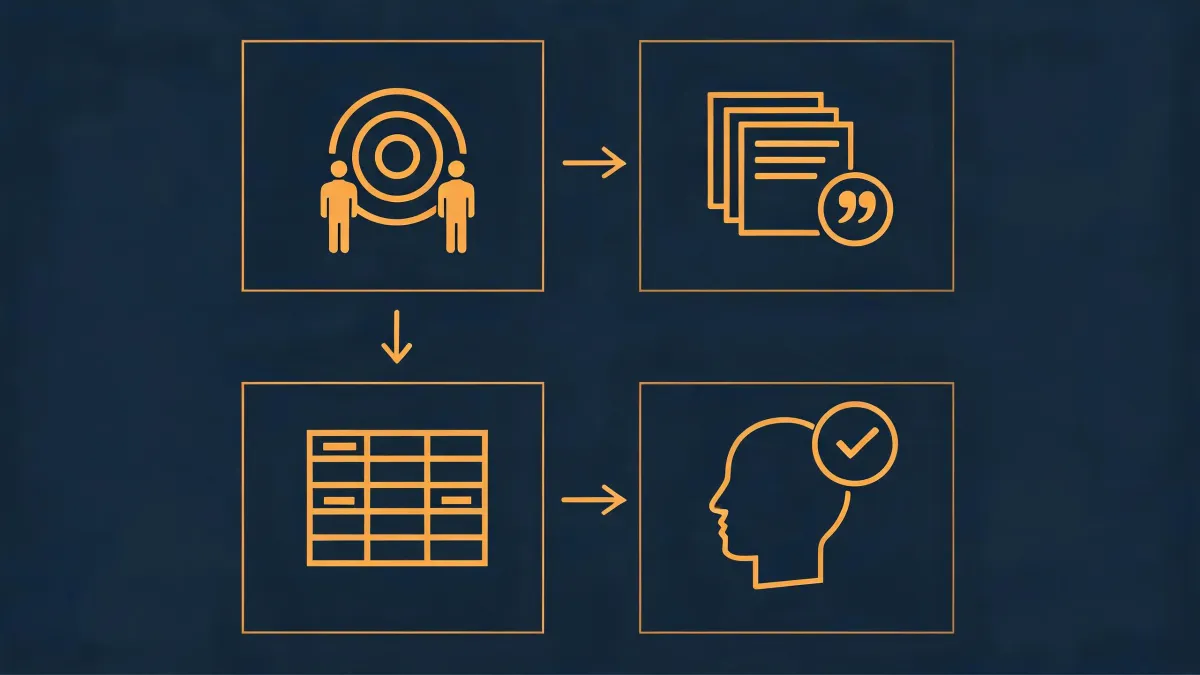
The workflow I evaluated had three parts:
- Phantombuster LinkedIn post extractor—pulling profile names and URLs from commenters on relevant posts.
- Data enrichment sales automation—matching those profiles to verified work email patterns.
- A professional email finder step—because the extractor gives you profiles, not inboxes.
That last part is the one most people forget. The output of an extractor is only a list. The value comes from enrichment.
The Turning Point: When the 'Simple' Workflow Got Complicated
Halfway through the evaluation, I almost gave up and built our own scraper. I went back and forth for almost a week. A custom script seemed cheaper. It also seemed more controllable.
I still kick myself for nearly making that call. I didn't think about the maintenance time, the broken selectors, the missing fields, and the constant checking. A scraper is not a one-week project. It's a subscription of your attention.
It's tempting to think that a scraper is just a scraper. But the complexity isn't in the initial extraction—it's in handling pagination, rate limits, and changes to LinkedIn's interface. That's where Phantombuster earned its keep.
We also had a deadline. The campaign was two weeks out. Normally I'd want a month-long pilot before approving a new tool. There was no time. I ran a small test on 12 posts and made the call based on that.
What the Results Looked Like
The extractor returned 327 profiles across 12 posts. After deduplication, 214 profiles remained. After enrichment, we found a professional email for 178. That's a 54% email coverage rate from public data—not perfect, but far better than the SDR team's manual copy-paste process.
Of course, the first pass wasn't perfect. I rejected the first enrichment batch because 6% of the email matches were wrong. We tightened the matching rules and reran it. That's the kind of quality control most sales automation blog posts don't mention.
Did Phantombuster break any rules? I can't prove it didn't. But the test exposed something important: the risk isn't just the tool. It's the way you target, the volume you run, and the data you download.
How Does Cold Email Fit into an Agent-Native Prospecting Workflow?
Here's the part that confused me at first. If AI agents can find and qualify prospects, why would you still need cold email?
Because cold email is the delivery mechanism. The agent-native part is everything before the message: finding the right accounts, extracting the right people, enriching their work emails, and drafting a personalized opening line. Cold email is what actually puts that work in front of a human.
In our test, the SDR team imported the enriched list into their sequence and sent a cold email with a personalized first paragraph. No one had to copy-paste the contact details manually. That's the workflow: extract, enrich, personalize, send.
This is how I now explain cold email to anyone who asks: it's not dead, and it's not spammy if your targeting is specific. It's the final leg of an automated relay.
The Cost Lesson: Value Over Price
Let's talk about money, because I know that's the real question.
Phantombuster is not the cheapest way to get data from LinkedIn. At one point, I thought I could build a free script and save the budget. By the time I'd spent a week debugging the script, the 'free' option had already cost more than a year of Phantombuster's subscription.
The lowest quote is almost never the lowest total cost. I've seen this in my own quality work. A cheap supplier might save $200 on paper, but one bad batch can cost $1,500 in rework. The same logic applies to sales automation. You're not buying a scraper. You're buying a workflow that doesn't fall apart.
Lessons I'd Hand to Anyone Evaluating Phantombuster
- Don't look for a safe tool. Look for safe usage. Low volume, clear targeting, and a separate account for testing. Respect LinkedIn's terms and your local privacy rules.
- Enrichment is where the ROI is. The extractor is the beginning. If you don't have a professional email finder and a matching rule, you're just collecting names.
- Build your cold email workflow before you extract. Otherwise, you'll end up with a messy list and no clear next step.
- Inspect the output. Don't assume the first export is clean. We rejected our first enrichment batch, and the second one passed. Small quality checks save your sender reputation.
Would I use Phantombuster again? Yes, with guardrails. But I'd say the same about any tool that touches LinkedIn. The last thing I want is to approve a system that damages the brand it's supposed to support.
That's the real quality standard. Not 'does the tool work,' but 'can we use it without becoming the problem?'