
Most sales stacks in 2025 are still built on 2019 assumptions. That's a mistake.
I buy the software. I don't run the sequences. I'm the office administrator for a ~120-person B2B company, and I manage roughly $300K in annual software and vendor spend across the revenue stack. I report to both operations and finance. Between SaaS subscriptions and one-off services, I process roughly 70 orders a year. That gives me a weird vantage point: I see what sales teams ask for, what finance approves, and what actually gets used. After five years of managing these relationships, here's my position:
Agent-native prospecting is the biggest change in sales workflows since CRM—but it's only as good as the company data you feed it. Phantombuster has become the data bridge in that stack.
That's a strong claim. I know. Stick with me.
An Opinion I Didn't Expect to Have
When I took over purchasing in 2020, I judged sales prospecting tools by price, integrations, and whether the sales team would actually use them. By 2024, I added a question to every deal review: where does the data come from? Because every AI agent in the stack—the one that researches accounts, the one that writes subject lines, the one that sequences follow-ups—needs clean input. Garbage in, garbage out. The fundamentals haven't changed. The execution has transformed.
I also learned that lesson the hard way with vendors. The vendor who couldn't provide proper invoicing cost us $2,400 in rejected expenses. Bad company data costs sales teams more than that—wasted sequence sends, burned domain reputation, and a list of leads that were never real opportunities. Simple.
What "Agent-Native" Actually Means
Before I go further, let's define agent-native. It's not a CRM plug-in that adds AI writing. It means an AI agent owns pieces of the workflow, not just the copy. The agent can:
- pull a list of companies from Google Maps or LinkedIn Sales Navigator;
- enrich it with contact details and company attributes;
- score accounts against criteria your team sets;
- draft sequence messages; and
- send emails, log replies, and hand active conversations to a human.
A human reviews before anything leaves the outbox. That's agent-native. And that's where Phantombuster fits: at the top, feeding data in.
The Data Problem Most Teams Ignore
I keep hearing pitches for AI SDRs that promise personalized at scale. My reaction now is: with what data? If you're personalizing on first name and company name only, you're not personalizing. You're just using a webform.
Company data is the missing layer. Think about what a sales rep needs to know before a first email: industry, approximate size, location, ratings or footprint, maybe social presence. That's not a random firmographic guess. That's observable public data.
Phantombuster is good at grabbing that data. For example, a Phantombuster Google Maps scraping recipe can pull business name, address, phone, website, and review counts into a spreadsheet. It's not 100% complete—no scraping tool is. But it's current, which matters more.
In our 2024 vendor consolidation project, I cut us from 14 tools down to 6. Phantombuster made the cut because it wasn't just one data source. It connects LinkedIn Sales Navigator, Instagram, TikTok, Facebook, and Google Maps. The sales team didn't need a separate scraper for every channel. That's why I stopped treating it as a lead-gen toy and started treating it as infrastructure.
Where Phantombuster Fits in a Real Workflow
Here's a concrete workflow I watched our team build—not with my help, mostly to their credit.
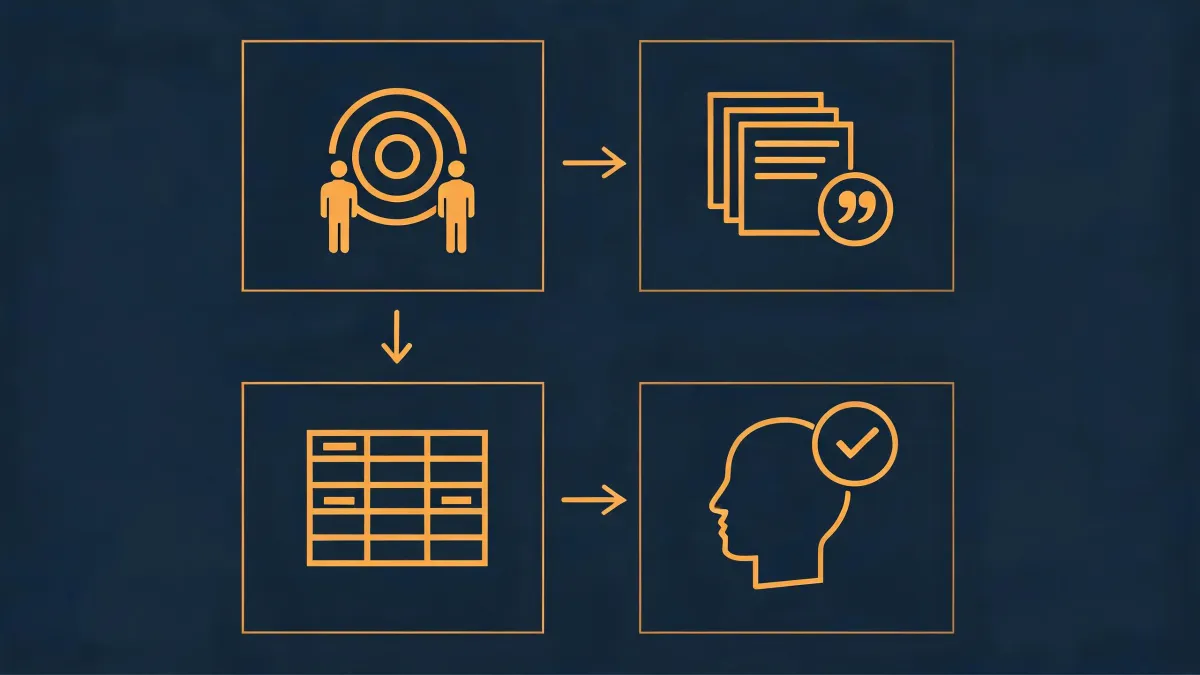
- Scrape Google Maps for independent coffee shops in the Southeast with rating above 4.5.
- Load the company list into a sheet. Phantombuster enriches it with website and business hours.
- Pass the list to an agent that filters for employee count and company stage.
- Agent uses LinkedIn Sales Navigator data to find the right decision makers.
- Agent drafts a short email sequence based on the company data—not a generic template.
Step 5 is the part that matters. Email sequences work when the list is narrow enough that every message feels relevant. If you know a company has 12 employees, 4.6 stars, and only operates in Florida, your first email can mention their actual footprint. That's hard to do with a purchased static list. It's easy when you have fresh company data in your workflow.
Because Phantombuster is no-code and writes to Google Sheets or a webhook, it plugs into Make, Zapier, or n8n for the agent layer. That's where the automation comes together. Of course, I'm somewhat skeptical of any tool that promises no effort. There was a learning curve. The first scrape we ran had duplicate entries, and one recipe needed a filter adjustment. Not ideal, but workable. Better than the alternative: three days of manual list-building by a rep who should be selling.
Email, Deliverability, and the FTC Anchor
Let's talk about email sequences because that's where most prospecting stacks break.
I've read a lot of LinkedIn posts about cold email deliverability. Most of them miss the real point: your domain reputation gets destroyed when you send too much irrelevant email. The fix isn't a new warm-up tool. It's sending to people who have a reason to reply. Fresh company data gives you that reason.
Also, if you're sending cold email at scale, know the rules. Per current FTC guidelines (ftc.gov), the CAN-SPAM Act applies to commercial email. Truthful subject lines, clear sender identification, and an opt-out mechanism are not optional. No tool can solve compliance for you. Anyone who promises zero risk with platform scraping is overpromising. Use Phantombuster responsibly—respect platform terms, run moderate volume, and don't treat any third-party data source as a forever guarantee.
I don't say that to kill the buzz. I say it because I've seen finance reject invoices when a compliance question slips through. We got the leads is not enough for ops.
Should You Try It? Free Tier and the Test
Here's where Phantombuster pricing free tier comes in. The free tier is enough to validate one or two recipes before you commit. Don't hold me to exact limits—they've changed since I last checked, I think. But the principle is rare in B2B software: you can test the actual workflow before procurement gets involved.
I'll be blunt: even after I signed off on Phantombuster, I kept second-guessing. What if the team never used it? The two weeks until the first Google Maps scrape was done were stressful. Then I got a Slack message that said Can we run this for Florida now? That's when I relaxed. So glad we didn't go with the cheaper spreadsheet-list subscription instead. Almost did, and we'd have been back to manual list-building in a month.
The Pushback I Keep Hearing
The main argument I hear is: we already have an AI SDR. We don't need scraping. I don't buy it.
An AI SDR with no company data is like an office administrator with no vendor invoices. It can process, but it can't verify. You wouldn't approve a purchase order from an unrecognized vendor. Why would you send an email sequence to a company that might not exist?
The second pushback is that scraping sounds risky. That's fair. I've evaluated maybe a dozen data tools this year—no, more like 15, I'm mixing it up with last year. The good ones work with public data and leave it to the customer to follow platform terms. The bad ones make promises no one can keep. In my experience, most legitimate platforms expect you to use their data responsibly. That's not a reason to avoid scraping. It's a reason to buy from a vendor that has documentation and an API.
Third pushback: we can just use a static list. Static lists rot. In our 2024 audit, we found roughly a third of a purchased list's phone numbers were disconnected, and maybe 15% of websites were dead—I'd have to check the exact numbers. Fresh data matters. That's it.
I'll be honest: this is not universal advice. At least, that's been my experience with a mid-size B2B revenue team.
Bottom Line
What was best practice in 2020 may not apply in 2025. The fundamentals haven't changed: right person, right message, right time. But the execution has transformed, and company data is now the fuel for that transformation.
Company data in an agent-native prospecting workflow isn't optional. Phantombuster isn't the whole stack. It's not a sales engagement platform, it's not a CRM, and it doesn't write your email copy. What it is: the bridge that gets public company data into the agent-native workflow. Cleaner. Faster. Still human-reviewed. That's it.
If you're building a modern sales prospecting stack, don't start with more AI. Start with the data. Then let the agents do their thing.