
-
What is Phantombuster?
-
What are the main features of Phantombuster's Instagram profile scraper?
-
What are the real alternatives to Phantombuster?
-
How does Phantombuster's LinkedIn connection email extractor work?
-
How does the LinkedIn Sales Navigator scraper fit into an agent-native prospecting workflow?
-
Is Phantombuster compliant with LinkedIn's terms?
-
What mistakes should you avoid when using Phantombuster?
I've spent the last five years as a RevOps consultant, handling 150+ rush prospecting requests for B2B sales teams. When clients need a qualified lead list in 24 hours, a prospect map before a Monday pitch, or a contact list before a conference ends, Phantombuster is usually the first tool I reach for.
These are the questions I actually get asked about it — with straight answers.
What is Phantombuster?
Phantombuster is a no-code automation platform for social media data extraction and lead generation. You connect your LinkedIn, Instagram, TikTok, Google Maps, or Facebook account, choose a pre-built automation (they call them "Phantoms"), configure what you want to pull, and it extracts structured data into a Google Sheet, CSV, or connected CRM.
The key thing I tell clients: Phantombuster is not a database. It's a collection tool. The output quality depends entirely on what's publicly available on the source platform. That sounds obvious, but it causes more mismatched expectations than anything else.
Phantombuster runs on a subscription model with a free two-week trial. Paid plans are tiered by monthly execution time, historically starting around $50–60/month (based on published rates, mid-2025; verify current pricing at phantombuster.com).
What are the main features of Phantombuster's Instagram profile scraper?
The Instagram Profile Scraper is one of the most-used Phantoms on the platform. In my role handling urgent prospecting data, it's usually the fastest way to build a lookalike list. Here's what it does:
- Follower and following extraction from any public Instagram profile
- Profile metadata capture — bio, follower count, and engagement metrics at the time of scraping
- Contact info mining — email addresses and other contact details accounts have listed publicly in their bios
- Structured export to CSV or Google Sheets, with integration options via Make, Zapier, or n8n
Last quarter alone, we pulled 2,400 Instagram accounts in the B2B SaaS space from 12 competitor profiles. Took about three hours of run time, if I remember correctly — a week of manual work saved. What the scraper doesn't do: no access to private accounts, no Stories, no DMs, and no historical tracking unless you schedule recurring runs. If you want real-time social listening, this isn't the tool.
What are the real alternatives to Phantombuster?
"Best" depends on what you need. I've tested most tools in this category. The honest breakdown:
LinkedIn-native prospecting: Apollo.io, Kaspr, and Waalaxy are legitimate options. They lean more into native LinkedIn enrichment and cold outreach workflows. If you want an all-in-one sales engagement platform with a built-in contact database, they're arguably stronger choices.
General-purpose scraping: Apify is the strongest alternative, especially if you're comfortable with code or have a developer on the team. Its marketplace covers hundreds of sites beyond social media.
Workflow automation: Make and Zapier can approximate some of these use cases, but you'll be assembling the pieces yourself.
The bottom line: Phantombuster wins on multi-platform social media extraction without code. Most alternatives are either more specialized on one platform or more developer-focused. A tool's total cost also includes setup time, data cleaning, and integration configuration — the lowest list price isn't automatically the cheapest.
How does Phantombuster's LinkedIn connection email extractor work?
The LinkedIn Connection Email Extractor scans your first-degree connections and pulls email addresses from their public profile contact sections. If a connection has made their email visible, the extractor finds it.
People often assume it's a backdoor into private data. It isn't. It only works on your existing connections, and if someone hasn't shared an email on their profile, the extractor returns nothing. (Source: Phantombuster product documentation, 2025).
The workflow I use: run the Sales Navigator scraper to identify prospects, send connection requests, wait a few days for approvals, then run the email extractor on your new connections. It's not instant — connecting with 200 prospects takes time — but it's dramatically faster than manual email hunting.
How does the LinkedIn Sales Navigator scraper fit into an agent-native prospecting workflow?
This is the question I get most in 2025. "Agent-native" gets thrown around loosely, but it describes something real: AI agents doing the reasoning and personalization while automated tools handle the data gathering.
Here's the pipeline I've built for clients:
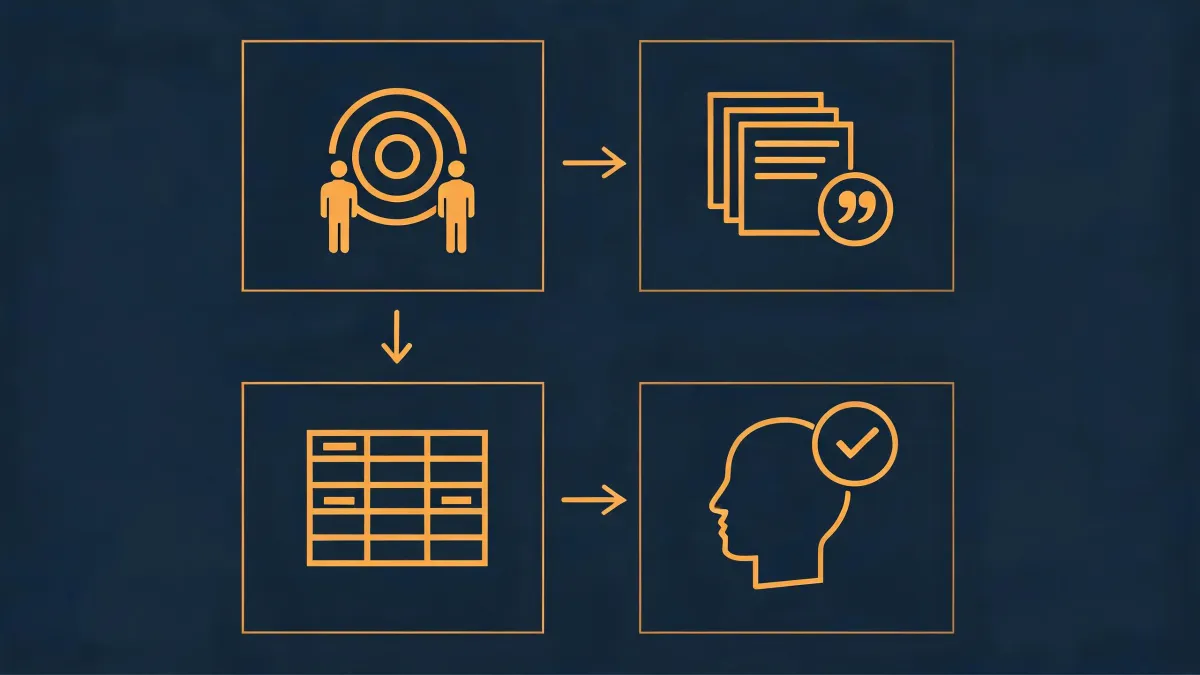
- The AI agent constructs the target search. You describe the ideal prospect, and the agent builds a LinkedIn Sales Navigator search URL with the right titles, industries, company sizes, and geography.
- Phantombuster runs the search. The Sales Navigator scraper processes that URL and pulls profile data — names, titles, companies, locations, profile links — into a structured table.
- The AI agent enriches and prioritizes. The scraped data feeds back into the AI pipeline, which filters irrelevant matches, enriches records, and ranks prospects by fit.
- A human approves the final list. The SDR reviews the prospects and the suggested outreach messaging before anything gets sent.
Phantombuster isn't the workflow — it's the data collection layer inside a larger system. The AI does the thinking, humans make the decisions, and Phantombuster does the gathering.
In March 2025, a client needed 600 qualified leads for a product launch with six days to go. Their SDRs were already stretched. We set up this exact pipeline, and they had a validated, prioritized prospect list in three days.
Is Phantombuster compliant with LinkedIn's terms?
Honest answer: be careful, and don't trust anyone who says "zero risk."
Phantombuster works by using your own account session to collect data that's visible to you as a logged-in user. But LinkedIn's terms around automated data collection are restrictive, and tools like this operate in a gray area.
What I've seen in practice: teams that run massive extraction volumes, connect with hundreds of people daily, and use the data for mass unsolicited outreach are the ones who run into trouble. If you keep volumes moderate and respect platform rate limits, the risk is much lower.
What you do with the data matters more than the scraping itself. Using it for personalized outreach to relevant prospects is very different from feeding a cold spam campaign. The tool doesn't create that problem — but it can amplify sloppy processes.
What mistakes should you avoid when using Phantombuster?
In my first year as a consultant, I made the classic rookie error: trusting the output without verifying it.
From the outside, automated tools look like they deliver perfect lead lists. The reality is that a scraper pulls exactly what the profile says — outdated job titles, stale companies, people who changed roles three times. One of my early rush jobs included a list of 200 "qualified decision-makers" where roughly 30% had wrong titles.
The most frustrating part: I knew I should build in a data-cleaning step, but I thought, "what are the odds it matters?" Well, the odds caught up with me.
Now there's a two-layer check in every workflow I run: an automated enrichment pass to flag incomplete records, and a human spot-check on at least 10% of the output. I should add that this makes a huge difference. It feels like it slows you down, but the cost of sending junk leads to your sales team is way higher. There's something satisfying about delivering a clean, validated lead list in 48 hours when the client expected a week — it just takes the extra step.