
Short answer: Okki Go is not a standalone sales prospecting skill you can switch on and forget. It is an agent-native prospecting layer — company database, business email finder, visitor tracking, and enrichment signals working together. Bulk email only belongs at the end of that workflow, after a human reviews the output.
I've been managing outbound prospecting workflows for 7 years. I've personally made and documented 11 significant mistakes, totaling roughly $18,400 in wasted budget and lost pipeline. Now I maintain our team's pre-send checklist so other people don't repeat them.
In my first year, 2017, I bought a cheap contact list because it was $300 cheaper than the verified option. It looked fine in the CSV. Then we sent 2,000 emails. The bounce rate hit 19%. Our domain reputation tanked. That mistake cost about $2,400 in wasted SDR hours, re-warming, and lost meetings.
So when someone asks, is Okki Go a sales prospecting skill, I get why they're asking. The market is full of tools that promise to be the skill. I don't buy that. Tools don't prospect. Workflows do.
Is Okki Go a Sales Prospecting Skill? The Honest Answer
Okki Go (okki-go) is closer to a prospecting system than a single skill. If you expect one button that finds leads, verifies emails, tracks visitors, and sends bulk email without judgment, you'll be disappointed. If you use it as part of an agent-native workflow, it can remove a lot of low-value research.
The skill isn't in the tool. The skill is in the orchestration: choosing the right company database filters, treating the business email finder as probabilistic, using visitor tracking as a signal rather than proof, and keeping a human in the loop before bulk email goes out.
That's the difference between automation and autopilot. Automation saves time. Autopilot creates incidents.
What Okki Go Actually Does in My Stack
Company Database: Quality Beats Volume Every Time
Everything I'd read about prospecting said bigger lists win. More accounts, more contacts, more chances. In practice, our best weeks came from narrower lists. Fewer bad-fit accounts. Fewer angry prospects. Less SDR cleanup.
The conventional wisdom is that you need 10,000 contacts to hit quota. My experience with 200+ outbound sequences suggests otherwise. A clean list of 500 accounts with strong intent signals beat a messy list of 5,000 almost every time. The company database matters less for its size than for its filters.
In September 2022, I made an enrichment mistake that still makes me wince. I pushed a batch through a cheap data add-on to save $180. It enriched job titles incorrectly for about 40% of the contacts. We sent senior-level messaging to coordinators. The result was a wave of unsubscribes and one very direct reply that said, quote, do you know who I am. Fair question. That error cost $1,100 in wasted enrichment credits plus a 2-week delay. The cheap add-on saved $180. Net loss: $920 and some pride.
Okki Go Business Email Finder: Verification Is Not a Guarantee
I treat every business email finder as probabilistic. That includes Okki Go. A finder can improve your odds. It can't guarantee 100% accuracy or deliverability. Nobody can, and anyone who says otherwise is selling you a story.
My workflow uses waterfall enrichment plus verification. Find the email. Verify it. Check catch-all domains. Suppress risky contacts. Warm the domain. Then send small batches first. If you skip those steps, you're not doing prospecting. You're gambling with your domain.
Here's the counterintuitive part: adding more email sources didn't help as much as adding better exclusion rules. We cut bounces by 41% by suppressing role-based addresses and recently changed domains. The finder was fine. Our filters were the problem.
Visitor Tracking: Intent Signals, Not Vanity Metrics
Visitor tracking is useful when it changes what you do next. If someone from a target account visits your pricing page twice in one week, that's a signal. Route them to a sequence. Assign an SDR. Do something.
But not every visit is buying intent. A competitor can visit. A student can visit. A bot can visit. I've seen teams treat every anonymous visit like a hot lead and burn out their SDRs. That's not tracking. That's noise with a dashboard.
We use visitor tracking to rank accounts, not to decide truth. It adds a layer to the company database. It doesn't replace judgment.
How Does Bulk Email Fit Into an Agent-Native Prospecting Workflow?
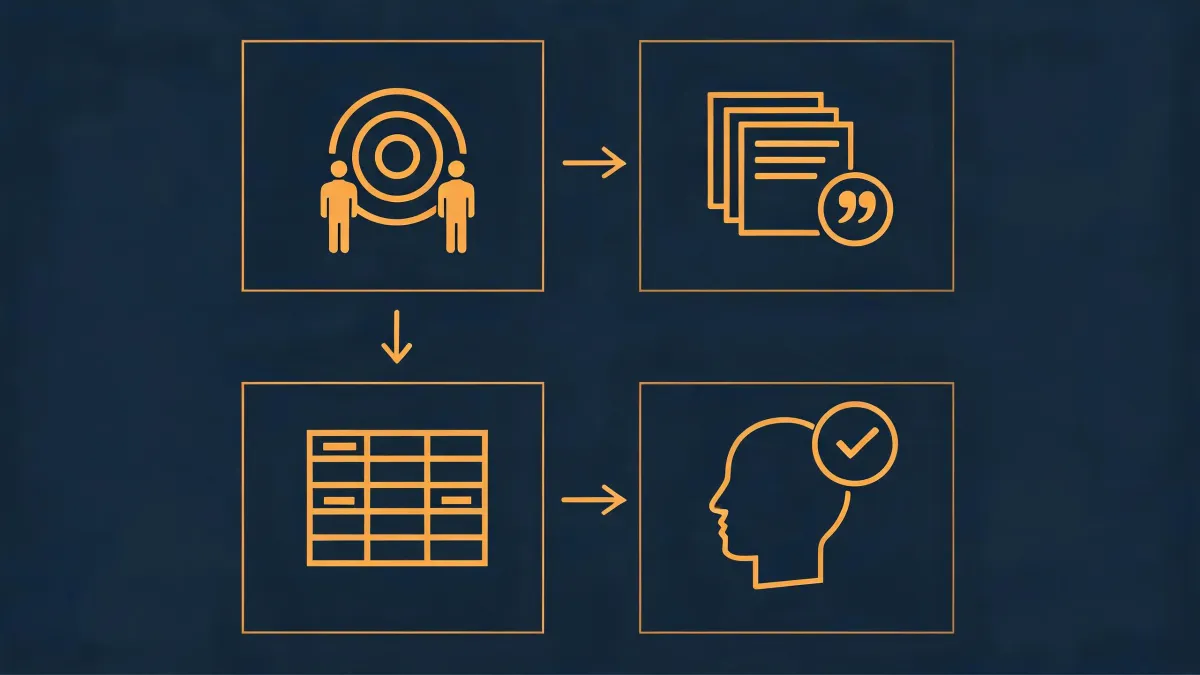
Bulk email is not the start. It's the output. In an agent-native prospecting workflow, bulk email fits at the end of a chain that looks like this:
- The agent builds an account list from the company database using tight ICP filters.
- It enriches contacts through a business email finder and waterfall enrichment.
- It scores accounts with intent data and visitor tracking.
- It drafts personalized sequences based on role, industry, and signal.
- A human reviews a sample, checks exclusions, and approves the batch.
- The system sends in controlled batches and monitors bounces, replies, and opt-outs.
If you remove step 5, you don't have a workflow. You have a liability. Bulk email at scale without review is how good domains die.
Per the FTC's CAN-SPAM Act compliance guide (ftc.gov), commercial email must include accurate routing information, a clear opt-out mechanism, and honest subject lines. That's not optional. It's the floor. I also keep a suppression list, honor opt-outs within 24 hours, and avoid misleading claims. Per FTC advertising guidelines, any claim in an outbound email must be truthful and substantiated.
Agent-native doesn't mean human-free. It means the agent does the repetitive work: research, enrichment, deduplication, scoring, and drafting. The human does the judgment work: offer fit, compliance, tone, and final send approval. That's human-in-the-loop outreach.
Bulk email can work well for event follow-ups, product updates to opted-in lists, and segmented cold sequences with strong signals. It works poorly as a cold spray. If your plan is to buy 50,000 contacts and hit send, no agent-native layer will save you.
The Money Lesson: Cheap Data Is the Most Expensive Data I've Bought
My view on price is simple: the lowest quote is rarely the lowest total cost. I've learned that the hard way.
In 2017, I saved $300 on a list. It cost us $2,400 in wasted time and domain recovery. In 2022, I saved $180 on enrichment. It cost $1,100 plus a two-week delay. In Q1 2024, after the third rejection from a prospect who'd received the wrong offer, I created our pre-send checklist. We've caught 47 potential errors using that checklist in the past 18 months.
Total cost of ownership for prospecting includes:
- Data cost and enrichment credits
- Verification and catch-all handling
- Domain warmup and deliverability recovery
- SDR time spent cleaning bad records
- Lost pipeline from missed signals or wrong messaging
- Compliance risk and opt-out handling
The base price is the smallest line. The hidden costs are where the money goes. That's why I don't chase the cheapest okki-go alternative or the cheapest business email finder. I look at what happens after the first send.
When Okki Go Is Not the Right Choice
I won't pretend Okki Go fits everyone. If you're sending fewer than 100 highly qualified outreach emails per month, a manual process may be better. You probably don't need an agent-native prospecting workflow. You need a sharp offer and a short list.
If you sell complex enterprise deals where one relationship can make or break the year, bulk email should be a small part of your mix. Use it for warm signals, not cold volume. And if you don't have a compliance review process, fix that first. A tool won't cover for a missing process.
Also, no prospecting tool fully replaces human SDRs or RevOps teams. It can remove research drag. It can surface signals. It can draft. It can't own a relationship, negotiate, or know when a prospect is having a bad quarter.
If you're evaluating Okki Go, start small. Run 50 accounts. Use the company database with tight filters. Add visitor tracking. Keep a human on the first 200 sends. Measure bounce rate, positive replies, and opt-outs before you scale.
If that feels too slow, you don't have a tooling problem. You have a risk problem. And bulk email will find it.