
The short version: there's no single setup
I'm not going to pretend there is one answer. The way free trial LinkedIn automation fits into an agent-native prospecting workflow depends on where you're starting. I say this as an administrator and buyer, not as a sales leader or a LinkedIn automation expert. I manage software purchasing for a mid-sized B2B team—roughly $80,000 annually across 9 vendors—and I report to both operations and finance. My job is to make sure the tools we buy actually get used and survive finance review.
By agent-native prospecting, I mean a workflow where software agents handle the repetitive first-mile work: finding potential leads, pulling company data, checking whether a record already exists in your CRM, and handing a clean list to a human. The term is a little fuzzy, so let me put it more simply. It's the difference between a person scrolling LinkedIn all afternoon and a machine doing the scrolling—or rather, a machine running the search, organizing the results, and leaving the judgment to a person.
Scenario 1: You're testing an agent-native workflow for the first time
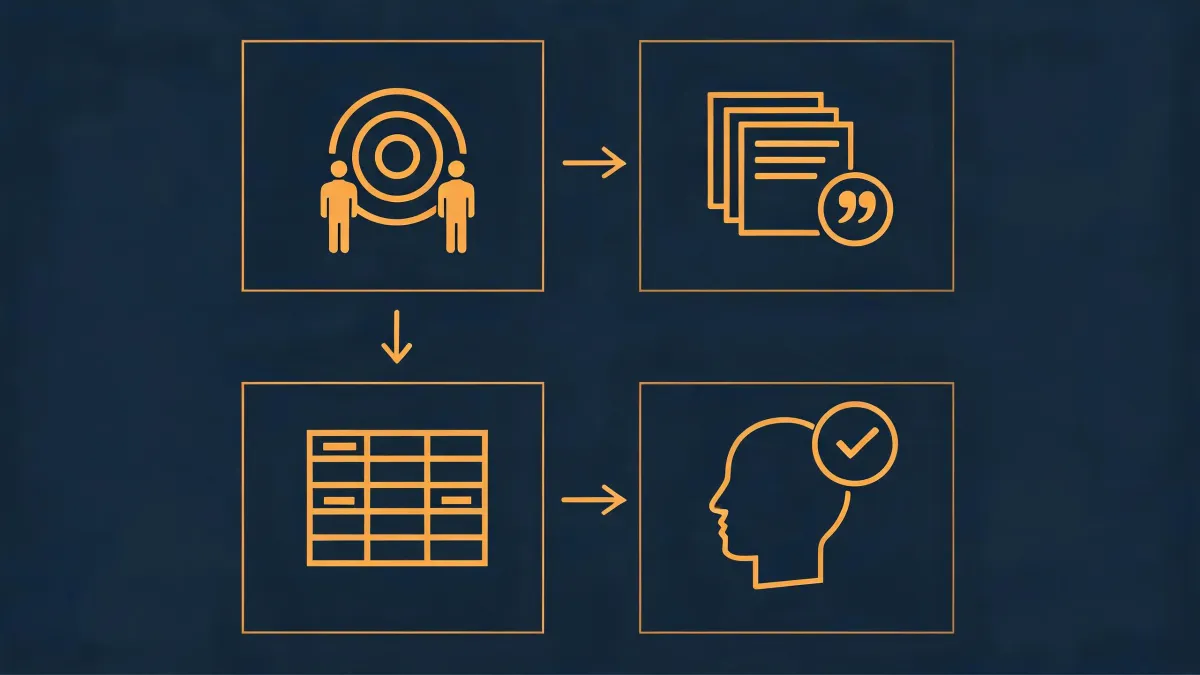
If you don't have a pipeline yet, don't buy five tools on day one. Start small. Phantombuster's free trial lets you run some automations and see what the output actually looks like before you commit. The no-code angle matters here: you don't need a developer to try it. In this scenario, your agent-native workflow can be as simple as: Phantombuster writes data to a Google Sheet, and a human reviews the sheet before it reaches the CRM.
The most natural place to start is a LinkedIn automation, especially if your team already uses LinkedIn Sales Navigator filters. Set up a scraper with the same filters you would use manually. Let it run overnight, then look at the results. Are they relevant? Are the fields complete? That's the whole test. According to Phantombuster's website (phantombuster.com, accessed June 2025), the platform includes LinkedIn, Instagram, TikTok, and Google Maps scrapers, so you aren't locked into one channel.
One honest caveat: no tool can guarantee LinkedIn compliance. I wouldn't trust a vendor that promised that. Use automation in a way that respects the platform's terms and your own internal risk appetite. A trial is a good way to see what the data looks like without making a big process commitment.
If LinkedIn isn't the only channel, try the Phantombuster Instagram comments scraper. I know it sounds like a strange first step if you came here for LinkedIn, but commenters on a relevant post can be warmer prospects than cold search results. The surprise, when I tested it, wasn't how many records the scraper pulled. It was how many of those records were actually worth contacting. If you're only looking at LinkedIn, you might be leaving money on the table.
Scenario 2: You already have agents and need data at API speed
The second scenario is different. You've built an agent pipeline and it already runs. The bottleneck isn't lead ideas. It's clean, structured company data that an agent can consume automatically. That's where the Phantombuster API becomes more interesting than the dashboard.
Instead of a person opening a spreadsheet, your agent can call the API, trigger a run, and pull the results as JSON. I'd describe the flow this way: your agent identifies a list of accounts, asks Phantombuster to enrich those accounts with company data from LinkedIn or Google Maps, then passes the enriched records to the next step in your stack. If you use Make, Zapier, or n8n, Phantombuster slots into those workflows without requiring a developer.
This is also where an email lookup tool comes into the picture. The data from a scraper gives you company and profile information, but the next step might be 'send an email.' You can connect an email lookup tool to the output, either inside your automation platform or through the API. I'd test the matching accuracy before you scale it. Some records will be missing data no matter what you do.
Honestly, I'm not sure why the API documentation doesn't get more attention. When I started evaluating Phantombuster, I focused only on the ready-made dashboard automations. The API is what makes it feel agent-native, because it turns the tool from a dashboard you log into into a resource your agents can request on demand.
Scenario 3: You're the buyer and admin evaluating for a team
If you're an administrator like me, the real test isn't 'does this tool find leads?' It's 'does this tool fit our workflow without becoming another shadow subscription?' Start with the free trial as an internal pilot. Give your sales team a specific task, like 'collect X records from LinkedIn using the filters we actually use.' See if the output is clean enough for them to pick up without a data-team intervention.
The most frustrating part of evaluating SaaS tools for me is that many trials are designed for an individual user. The moment you need to share the results with a colleague or a manager, you hit an access wall. That's a legitimate decision point. If the trial output can be exported to a Google Sheet, your workflow can work. If you can't get the data out, the tool is just a toy.
I've also been the person who skipped a serious trial and bought based on a demo. That's how I ended up with an automation subscription nobody used. It cost us more than the monthly fee, because it made the next tool review harder to justify. In the 2024 vendor consolidation project, I insisted on a documented trial for every candidate. We had to show finance why each tool earned a spot.
This is where I'll make my small-client point, too. On the teams I've worked with, our spend was small enough that some vendors did not seem to care whether we stayed. The ones that treated a trial user as a serious buyer earned the loyalty. If you ask me, today's small order might be tomorrow's larger one. A tool that gives you a real free trial is already telling you something about how it treats customers.
Which one are you? A quick way to decide
Ask yourself one question: if the automation ran perfectly tonight, what would it hand you tomorrow morning?
- If the answer is 'a list someone can start emailing,' start with the simplest trial workflow. Let Phantombuster write to a Google Sheet and review it like a lead list. That's scenario 1.
- If the answer is 'JSON my agents can ingest automatically,' spend your time on the Phantombuster API and its integrations. Test one agent call with a small data sample before you build the whole pipeline. That's scenario 2.
- If the answer is 'evidence this tool deserves a recurring subscription,' run a documented pilot and get feedback from the people who will actually use it. That's scenario 3.
You can also be in more than one. When I was evaluating tools last year, I was in scenario 2 and 3 at the same time. The API mattered because our ops team needed automation, but the pilot mattered because I needed finance to approve the spend.
One last thing
Everything I've described is based on my experience as of mid-2025. Phantombuster changes trial terms, pricing, and agent availability faster than I can keep up with. Verify current trial limits and API documentation before you design a workflow around them. If something about your setup is different, adjust the scenario. The point isn't to force one universal answer. It's to help you find your own.