
The surface problem: you think you need more contacts
I run revenue operations for a B2B outbound team. I've handled 200+ rush list builds in 7 years, including same-day turnarounds for enterprise clients. In March 2024, 36 hours before quarter close, a sales leader called at 6:40 p.m. needing 2,500 contacts for a Monday launch. Normal turnaround is five days. We found a vendor with waterfall enrichment, paid $900 extra in rush enrichment fees, and delivered 2,100 usable records. The alternative was a pretty empty calendar.
But here's the thing: the request wasn't really 'give me 2,500 contacts.' It was 'give me pipeline before the quarter ends.' And most RevOps teams still evaluate B2B contact data solutions like they're buying a list. Database size. Match rate. Price per record. Coverage. Those are the surface metrics.
What most people don't realize is that vendor match rate often measures whether a field is populated, not whether it's correct, compliant, or safe to email. Here's something vendors won't tell you: a 'verified' email from January can be a bounce in July. B2B contact data decays fast. Job changes, role changes, company changes, domain changes. Roughly speaking, last year's clean list is this year's cleanup project.
What should revenue operations teams evaluate in B2B contact data solutions?
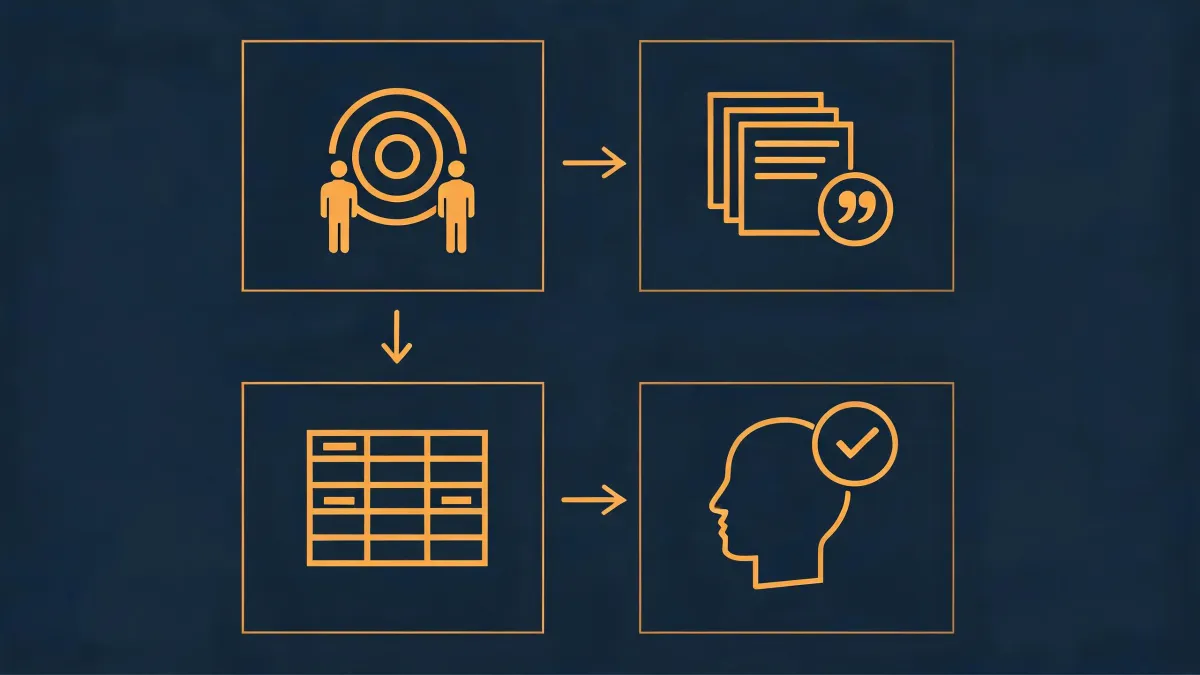
Contact data is not a spreadsheet. It's an input into routing, sequencing, personalization, enrichment, intent prioritization, CRM sync, forecasting, and compliance. If the input is bad, everything downstream gets worse. The SDR sends to a dead inbox. The CRM creates a duplicate. The routing rule assigns the wrong owner. The forecast gets a fake meeting. The opt-out doesn't sync. The LinkedIn automation runs on a stale title.
So the real question isn't 'which vendor has the most contacts?' It's 'which vendor improves our revenue workflow with the least downstream risk?' That's a TCO question. Total cost of ownership. Not just price per record.
When RevOps teams evaluate B2B contact data solutions, I think they should look at at least nine things:
- Source composition and provenance. Where did the record come from? Opt-in, public web, licensed data, contributory network? Can the vendor explain it?
- Verification freshness. When was the email or phone last verified? Is it re-verified before export or CRM sync? What's the decay policy?
- Waterfall enrichment logic. Which sources are queried, in what order? Can you control the order? What happens when enrichment fails?
- Intent and trigger signals. Hiring, funding, tech stack changes, website visits, content downloads. Are the signals actionable, or just dashboard decoration?
- CRM enrichment and sync. Is it bidirectional? How are duplicates handled? Does it overwrite owner, stage, or opt-out fields? Does it respect suppression lists?
- LinkedIn automation and account safety. Does the workflow use authorized APIs, or does it risk account restrictions? Is there human-in-the-loop outreach, or does it blast connections?
- Compliance and consent. GDPR, CCPA, CAN-SPAM. Do you have a DPA? Are opt-outs synced across systems? Can you prove lawful basis?
- Usable-contact economics. Not cost per record. Cost per usable, compliant, routed contact that actually reaches a human.
- Measurement. Bounce rate, reply rate, meeting rate, pipeline, data decay, CRM hygiene. If the vendor can't report on downstream quality, you're flying blind.
I'm not sure any vendor nails all nine. But if a demo skips these questions, it's probably just theater.
The cost of getting it wrong
Bad contact data is expensive in ways that don't show up on the invoice.
First, SDR time. If your SDR spend is $500,000 and 20% of your list is unusable, that's six figures of wasted effort. Not all at once. But in small, daily leaks: wrong numbers, dead emails, duplicate records, manual cleanup, bad personalization.
Second, deliverability. According to Google's Email Sender Guidelines (support.google.com, effective February 2024), bulk senders should keep spam complaint rates below 0.3% and support one-click unsubscribe. High bounce rates and complaints don't just hurt one campaign. They can hurt the domain you use for all outbound. I can't promise any specific outcome—no one can—but the risk is real.
Third, CRM rot. Duplicates, stale titles, wrong owners, broken routing. One bad record is annoying. Ten thousand bad records is a data governance problem. We didn't have a formal contact data acceptance process. Cost us when a quarter-end campaign went to 4,000 stale records. The routing sent the wrong owner to a target account. The data said the VP still worked there. She'd left eight months earlier.
Fourth, compliance. Under GDPR (effective May 25, 2018), processing B2B contact data requires a lawful basis and respect for data subject rights. Verify current requirements at gdpr-info.eu or with your legal counsel. The FTC's CAN-SPAM Act (ftc.gov) requires accurate headers, clear opt-out, and prompt honoring of opt-outs. LinkedIn's User Agreement and help pages prohibit scraping and unauthorized automation; verify current rules at linkedin.com/legal/user-agreement. Compliance isn't a feature you bolt on later.
And fifth, opportunity cost. The upside was saving $1,200 on a cheaper data vendor. The risk was missing the quarter. I kept asking myself: is $1,200 worth potentially losing a $60,000 deal? The expected value said maybe. The downside felt catastrophic.
What good evaluation looks like in practice
Start with a pilot. Not 50 records. Sample 500 to 1,000. Run them through your actual workflow: enrich, verify, sync to CRM, check routing, test suppression, send a small compliant sequence. Measure bounces, duplicates, opt-out sync, and manual cleanup hours.
Define acceptance criteria before the demo. Things like: bounce rate target, duplicate rate, enrichment coverage, CRM field mapping, opt-out latency, and intent signal relevance. Set your own thresholds. Don't let the vendor set them for you.
Build a TCO model. It should include data cost, enrichment credits, verification fees, seat minimums, API costs, implementation time, SDR cleanup, deliverability remediation, and compliance review. Contact data pricing ranges from about $0.01 to $1+ per record depending on source, verification, and intent enrichment (based on vendor quotes I've seen in Q1 2025; verify current pricing). The $0.05/record quote can turn into $0.18 all-in pretty fast. The $650 all-inclusive quote might actually be cheaper.
This is the lens I use when looking at something like okki go. The okki go first prospecting workflow should be evaluated the same way: not as a bigger database, but as a sequence of steps—find, enrich, verify, prioritize with intent, sync to CRM, then let a human decide what to send. Agent-native prospecting, waterfall enrichment, and human-in-the-loop outreach are useful patterns because they keep the workflow inspectable. If a tool can't show you how each step affects downstream bounce, routing, and compliance, the demo is just theater.
If you're comparing okki-go or okki go against other options, ask to see the first prospecting workflow end to end. Ask where the data comes from. Ask when it was last verified. Ask how opt-outs sync. Ask what happens when enrichment fails. Ask for a sample TCO model. You might still choose a bigger database. But at least you'll know what you're buying.
A simple RevOps scorecard
Before you sign, ask these eight questions:
- Where did this record come from, and can you prove it?
- When was this email or phone last verified?
- What happens when waterfall enrichment finds nothing?
- How does the tool handle CRM duplicates, owners, and suppression lists?
- Can we sync opt-outs across CRM, outbound, and LinkedIn automation?
- What intent signals do we get, and what's the source?
- What's the all-in cost per usable, compliant, routed contact?
- What does the vendor do when the data is wrong?
That last one matters. Every vendor will have bad records. The question is whether they help you find and fix them, or whether you find out when your SDRs start complaining.
The real takeaway
The problem isn't that RevOps teams need more contacts. The problem is that contact data is treated like a commodity when it's actually a workflow input. If you evaluate B2B contact data solutions by record count and price per record, you'll probably get exactly what you paid for—and then pay again in cleanup, deliverability, and missed pipeline.
Use total cost thinking. Measure downstream quality. Keep a human in the loop. And if you're evaluating okki go, okki-go, or any other tool, make the first prospecting workflow prove itself before it touches your CRM. The best data solution isn't the one with the most contacts. It's the one that makes your revenue workflow less fragile.