
-
Three scenarios, not one recommendation
-
Scenario A: When Apollo is the right call
-
Scenario B: When Phantombuster is worth the money
-
Scenario C: Hybrid social + email outbound
-
What Should Revenue Operations Teams Evaluate in Cold Email?
-
AI Cold Email Is a Multiplier, Not a Solution
-
The Counterintuitive Part About Phantombuster Pricing Cost
-
How to Decide Which Scenario You're In
Let me start with the honest version: there's no universal answer to Phantombuster vs Apollo. The right choice depends on where your leads live, how fast you need them, and what happens when a deadline slips.
In my role coordinating outbound lead generation rescues for B2B companies, I've handled 200+ pipeline emergencies in the last few years. When I'm triaging a rush order, I don't start with feature lists. I start with one question: where is the pipeline leaking?
Here's the framework I use, and I think it'll help you evaluate any email finder tool, including the cold email stack you're building right now.
Three scenarios, not one recommendation
There are basically three situations I see when revenue operations teams ask about cold email tools.
- Scenario A: Database-first. You need to search a massive B2B database, enrich contacts, and get outbound going quickly. This is where Apollo's free tier and database shine.
- Scenario B: Social-list-first. Your best prospects are on LinkedIn Sales Navigator, Instagram, TikTok, or Google Maps. You need fresh lists built from those platforms, not a static database. This is where Phantombuster makes sense.
- Scenario C: Hybrid. You need social signals plus verified emails, connected to your CRM and your sending platform, without manual work between each step.
Most of the articles I read skip this and go straight to a feature comparison. That's backwards.
Scenario A: When Apollo is the right call
If your ICP is well covered by a B2B contact database, Apollo is a legitimate choice. I've used it myself. The free tier is a useful email finder tool, and the data coverage is broad. But here's the trap I fell into in my first year: treating database size as data quality.
In my first year doing this, I made the classic cold email mistake—I assumed more contacts meant more chances. I bought a large list from a budget vendor, uploaded it to my sending platform, and watched the bounce rate climb to a level that made my email service provider nervous. Cost me a week of cleanup and a damaged sender reputation.
If you go database-first, do a small verification test before launch. Send 50 emails. Watch the bounce rate. Then decide. An email that never arrives is worse than no email at all.
Scenario B: When Phantombuster is worth the money
This is where Phantombuster pricing cost becomes an easier conversation. You're not paying for access to a data lake. You're paying for the ability to extract a targeted list at a specific moment, from a platform where your buyers are actually active.
In March 2024, 36 hours before a client's product launch, their sales team realized their existing prospect list was stale. We used a LinkedIn Sales Navigator phantom in Phantombuster to pull 300 accounts matching their ICP, enriched those profiles with an email finder tool, and had a personalized campaign ready before the morning meeting. The client's alternative was missing the launch window entirely.
That's the part of Phantombuster pricing cost that most comparisons miss. You're buying certainty: the list is fresh because you just pulled it. The workflow is repeatable because it's automated. And for a RevOps deadline, certainty is the product.
Scenario C: Hybrid social + email outbound
The best cold email stacks I've seen don't force you to choose Phantombuster vs Apollo as an either/or. They use both for different jobs.
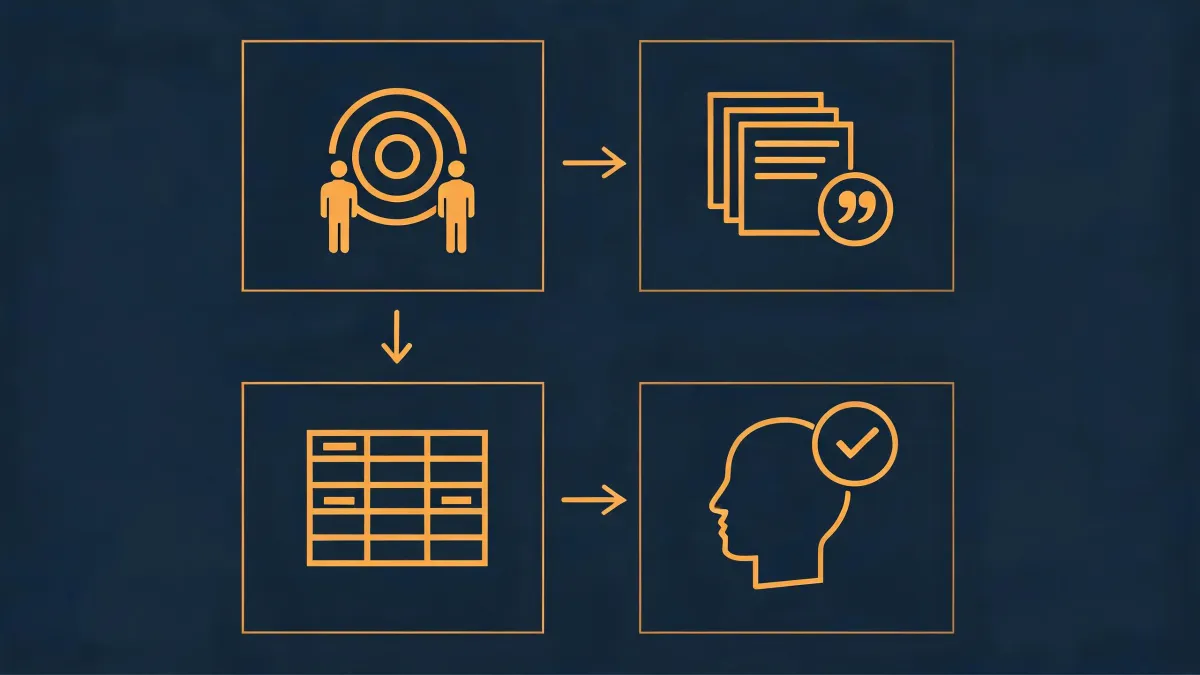
Example workflow: a Phantombuster phantom watches a LinkedIn Sales Navigator search and sends new profiles to a Google Sheet. Make, Zapier, or n8n picks up those profiles, enriches them with email addresses, and pushes them to your CRM. Your AI cold email tool then takes over with a personalized first line.
This is how you build a pipeline that reacts to real buying signals, not just static lists. And it's the exact kind of architecture I recommend when revenue operations teams ask what to evaluate in cold email.
What Should Revenue Operations Teams Evaluate in Cold Email?
Whenever I sit down with a RevOps team, I tell them to ignore the AI hype for a moment and focus on these five operational realities.
- Data freshness. When was this list last verified? A contact from 2023 is not a lead; it's a time bomb.
- Integration depth. Can a trigger flow from LinkedIn to your CRM to your sending platform without a human in the middle? This is where Phantombuster's Make, Zapier, and n8n integrations matter.
- Deliverability controls. Does your email finder tool actually verify, or does it just guess? Find is easy. Verify is hard.
- Compliance friction. Per FTC business guidance (ftc.gov), commercial email needs truthful headers and a clear opt-out. If your stack doesn't handle that, you're building compliance debt.
- Cost per meeting, not cost per lead. A free tool that takes hours to clean is more expensive than a paid tool that's done by lunch.
The most frustrating part of cold email stack evaluation is how often the same issues keep appearing: stale data, broken integrations, and no way to know if your deliverability problem is data or copy. You'd think modern tools would solve this by default, but that's exactly what the premium price is for.
AI Cold Email Is a Multiplier, Not a Solution
I have mixed feelings about AI cold email. On one hand, it's made personalized outreach accessible to teams that could never afford a full SDR desk. On the other, it means everyone is sending AI-generated emails, so genuine relevance matters more than ever.
Here's the non-negotiable rule: AI doesn't fix bad data. It scales it. If you feed an AI cold email tool a list full of stale addresses, it will cheerfully write 2,000 messages to people who'll never see them. The smartest model in the world can't save a list that was never verified.
Use AI to generate subject line variants, test different angles, and handle follow-up timing. Use your email finder tool to ensure the address actually exists. And use your RevOps brain to question any tool that promises perfect data—because in my experience, perfect data is only perfect on the demo call (note to self: never trust a demo that uses their own clean list).
The Counterintuitive Part About Phantombuster Pricing Cost
Here's where my emergency specialist bias shows up. I am a believer in paying for certainty. After getting burned twice by probably-on-time vendors, I changed my policy. The same logic applies to cold email tools.
An uncertain cheap option is more expensive than a certain premium one. If a tool fails the day before your biggest outbound campaign, the cost is not the subscription. The cost is the missed pipeline. The cost is the team sitting idle. The cost is the reason you're reading this article looking for a fix.
So when someone asks me about Phantombuster pricing cost, I don't ask about the monthly plan. I ask how many hours of manual list building it will save. I ask how much a predictable workflow is worth to a sales team that's been burned by bounce rates. The number that matters is total cost of ownership (i.e., cost per meeting, not cost per subscription).
A tool that fails on the day you need it is the most expensive one you'll ever buy.
How to Decide Which Scenario You're In
You don't have to guess. Ask yourself three questions:
- Where are your best leads actually visible? If they're active on LinkedIn, Instagram, TikTok, or Google Maps, you need a social extraction tool like Phantombuster. If they're already sitting in a B2B database, Apollo is the simpler path.
- What's the real cost of missing your deadline? If it's high, bias toward the tool that gives you control and repeatability, not the one with the lowest upfront price.
- Can your operations team maintain the workflow? A no-code setup with Make, Zapier, or n8n is easier to keep alive than a custom script that only one person understands.
If you answered social, high, and yes, you probably want a hybrid stack. That's where Phantombuster and Apollo coexist peacefully.
The bottom line: Phantombuster vs Apollo is a false binary. Apollo is a strong database-first option. Phantombuster is a strong social-list-first option. The real evaluation for RevOps teams is not which tool wins a feature comparison—it's which stack gets you from signal to meeting before your deadline runs out.
Build for certainty. Verify before you send. And don't let AI write checks your email delivery can't cash.