
The Short Version
Phantombuster is an extraction layer, not an AI SDR. That's the conclusion I keep coming back to after reviewing prospecting stacks for four years. If you buy it expecting LinkedIn profile extraction, email extractor behavior, and agent-native workflow automation, you'll be happy. If you buy it expecting an AI sales rep that writes and sends sequences for you, you'll be disappointed.
I recommend Phantombuster for teams that already have a CRM, a sequencing tool, and a compliance review process. I don't recommend it for teams that want a fully managed AI SDR.
The pricing question is usually the wrong first question. Phantombuster pricing is monthly, and the plan limits matter more than the headline price.
This was accurate as of June 2025. Pricing changes fast, so verify current plans before you budget.
Why I can talk about this
I'm a quality and brand compliance manager at a B2B lead generation company. I review every automation workflow before it reaches clients—roughly 200 items a year. In Q1 2024, I rejected 18% of first deliveries because the output lacked source documentation or would have failed our own deliverability check. That number hurt. It also made me the person who asks 'where did this data come from?' before anyone else can.
I've been doing this since 2020, when most 'AI SDR' features were just auto-personalization gimmicks. I've watched three teams treat extraction tools like they were sales reps, and I've watched two of them come back to a human-led review process. The tool isn't the problem; the workflow design is.
Phantombuster pricing monthly: what the price really includes
The first thing I see buyers do is focus on the monthly price and completely miss execution hours and API query costs. The question everyone asks is 'how much per month?' The question they should ask is 'what is the cost per usable lead?'
As of June 2025, Phantombuster's pricing page (phantombuster.com/pricing) lists monthly plans that scale with execution hours and integrations. Some plans include more API calls. None of the plans include a built-in email sequence engine. That's not a complaint; it's a positioning statement.
What the monthly price doesn't include
In practice, I tell teams to budget for total cost of ownership (i.e., the tool plus the cleaning and verification steps). A LinkedIn profile extractor run can produce 10,000 rows. Your CRM will then show 10,000 'leads'—but maybe 1,500 have verified emails and maybe 400 are actually in your ICP. If you don't have a way to filter that, the monthly pricing is the cheapest part of the project.
Don't assume the first plan you see is enough. A free trial is a good time to run one full extraction and one API test, not just to play with the dashboard.
The LinkedIn profile extractor is a list generator, not a lead generator
Phantombuster's LinkedIn profile extractor works with LinkedIn Sales Navigator search URLs. You set up a search, paste the URL into Phantombuster, and it pulls profile data in the background. It feels like magic the first time. Then you open the CSV and realize it's just a list of people who matched a Boolean query.
Email extractor expectations vs. reality
That's where the email extractor question gets messy. Phantombuster can pull email addresses when they're visible on profiles or in some data sources, but it's not an enrichment waterfall. If an email isn't there, it isn't there. (Thankfully, in my experience, it's honest about that.) The output is only as good as the underlying profile completeness and your skill at writing search URLs.
People think more rows means more pipeline. Actually, more unclean rows means more bounces and worse sender reputation. The causation runs backwards: a smaller list with verified emails and clear signals will outperform a dump of unverified addresses. I do not mean 'smaller is always better'—I mean 'dirty data is expensive in ways that don't show up on the Phantombuster invoice.'
When the profile extractor does shine is as an input signal source. Combined with Google Maps extraction or TikTok/Instagram scraping for niche audiences, it helps you model an ICP before you send a single email.
How email sequences fit into an agent-native prospecting workflow
Email sequences fit as the orchestration layer around the agent—not inside it.
'Agent-native prospecting' means different things to different tool vendors. In my reviews, I translate it as: an AI agent does the research, enrichment, and prioritization, and then hands a tidy batch of leads to a sequence tool. Phantombuster is the agent's hands. It does not write the emails.
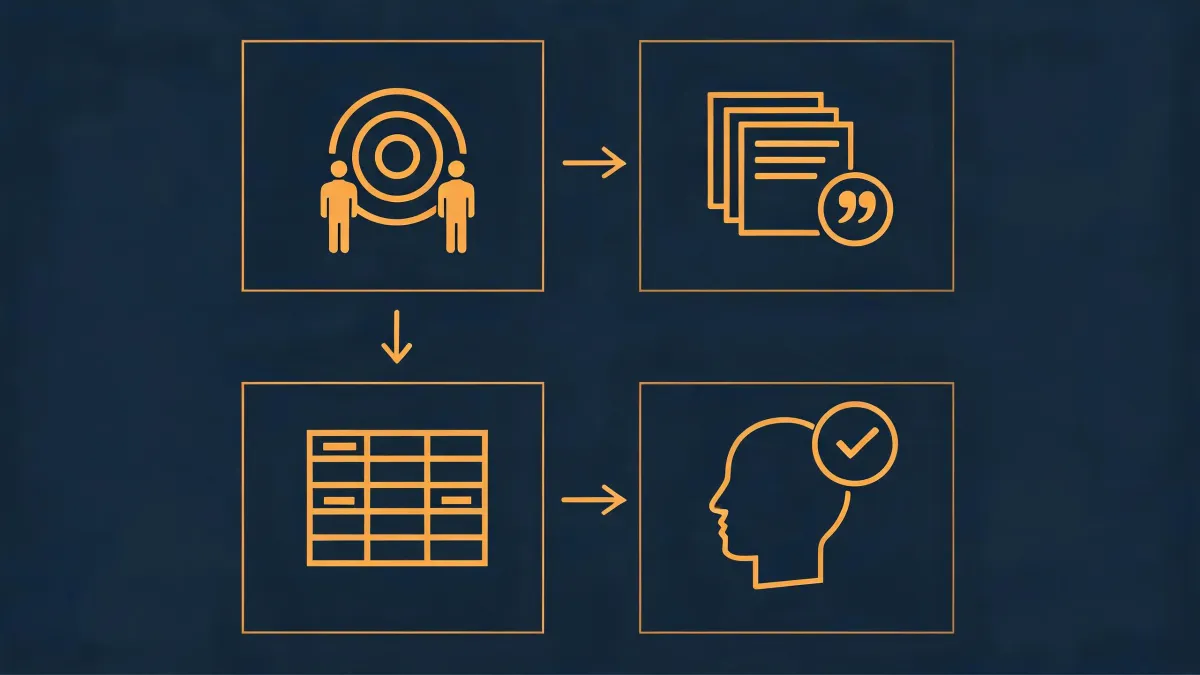
A typical agent-native handoff
- Build a Sales Navigator search that matches your ICP.
- Use Phantombuster to extract profiles (and visible emails) from that search.
- Send the output to your CRM or a spreadsheet via a Make, Zapier, or n8n integration.
- Run a verification step (separately) to flag risky or invalid addresses.
- Push the verified list into your email sequence tool.
- Use the extracted profile signals to personalize the first line—manually or with AI.
That is an agent-native workflow: humans define the rules, software agents execute the repetitive parts, and email sequences are the final mile that turns profiles into replies. If you remove the extraction layer, your sequence tool is just working with stale data. If you remove the email sequence layer, you're collecting names without revenue.
One more thing: Phantombuster's AI SDR features are not an email writer. There is no 'draft my sequence' button. Instead, you get data structures and integration triggers that make AI-generated sequences far less generic. The difference is meaningful when you're evaluating 'AI SDR features.' If a platform writes a good enough first line because it saw a signal Phantombuster extracted, that's the feature working.
Honestly, I had two hours to pick between Phantombuster and another point tool during a client campaign. I normally do a side-by-side bakeoff. There was no time. I chose Phantombuster because the API docs were straightforward and the Make integration trigger was obvious. In hindsight, I should have done a 50-row test first. It worked out, but I didn't relax until the first email sequence produced a positive reply rate.
Where I'd draw the line
Phantombuster is not a fit if you want a single tool that discovers, cleans, writes, sends, and reports. The no-code automation is powerful, but it's still automation. You own the workflow logic, the data quality, and the legal side of the data.
I also see teams overestimate the LinkedIn profile extractor's accuracy for 'email extractor' use cases. It's not an oracle. It's a scraper. The data is as fresh as the source on the day the job runs. If your campaign will last three months, you'll need to re-run or re-verify before the second month.
On compliance: I'm not a lawyer, and I'm not going to tell you any scraping tool is risk-free. FTC guidance on substantiated claims (ftc.gov) has made me allergic to vague sourcing, and the same instinct applies to prospect data. Check your target market's data protection rules, know where your prospect list came from, and keep an audit trail. I have rejected vendor claims in my own industry for less.
If your situation is 'we want to test outbound with a tiny list and no budget for an ops person,' the monthly pricing might still feel wasteful. The tool asks you to think in workflows. If you don't have time to build one, get a managed service.
If your situation is 'we have a CRM full of accounts, we need fresh signals and handoff-ready leads,' that's exactly what I'd use Phantombuster for.