
I set up lead generation automations for B2B sales teams. It's the kind of job where you collect scars instead of bonuses if you're not careful. I've been doing this for about six years—or rather, six years and three months of near-misses—and I've personally made (and documented) 11 significant mistakes, totaling roughly $34,000 in wasted budget. That's why I now maintain our team's checklist instead of just being the 'automation guy.'
So when someone asks me what I think about the Phantombuster LinkedIn message sender Phantom, I don't reply with a feature list. I reply with the question that matters: what is human-in-the-loop review, and when should a B2B sales team use it?
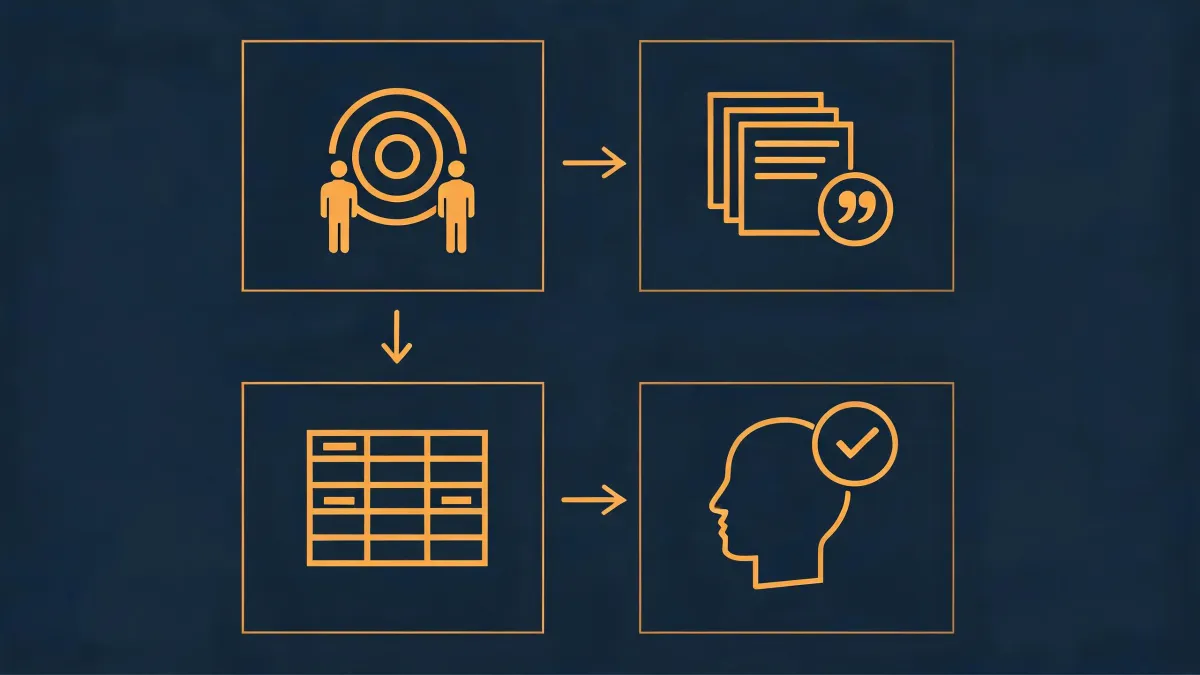
Human-in-the-loop review is exactly what it sounds like: a person reads, edits, or rejects AI-generated or automated output before it goes out into the world. For sales outreach, that means a human checks messages, merge fields, personalization, and follow-up triggers before a Phantom sends them. It's not a replacement for automation. It's the safety rail that keeps automation from driving off the road.
I went back and forth between full automation and a full manual review for two weeks. Full automation meant velocity; full manual review meant control. In the end, I chose a hybrid—not because the data was clear, but because my gut said I was one merge-field error away from a bad week. The data agreed later.
There's no single yes or no answer to whether you need a review step. I've set up campaigns where adding one was overkill, and I've set up campaigns where skipping it cost me a week of credibility. The difference comes down to three scenarios.
Scenario A: You're a solo operator
If you're a one-person show, the Phantombuster LinkedIn message sender Phantom can be a huge time-saver. You can automate connection requests, follow-ups, and the tedious parts of prospecting. But your name is the only brand. A bad message doesn't get absorbed by an anonymous team inbox—it comes straight back to you.
In September 2022, I set up a Phantom to send 400 connection requests overnight. The automation worked. The message didn't. A merge field pulled the wrong job description, and I woke up to 57 replies, 12 unsubscribes, and one 'Who exactly are you and why are you telling me about a role I don't have?' That was a $450 mistake in wasted sequencing time, plus the awkward cleanup. Three minutes of human review would have caught it.
For solo operators, my advice is to automate the collection part and review the communication part. The Phantom can gather LinkedIn profiles all day. It can also handle a simple, safe connection request that doesn't make claims. But the moment you add AI-written icebreakers, reviews, or follow-up messages, you need a human-in-the-loop step. Phantombuster's AI sales assistant features are getting better, but they still hallucinate. I've seen it invent a job title that looked perfectly real—and wasn't on the prospect's profile at all.
Scenario B: You're a growing B2B sales team (5–30 reps)
Once you have multiple reps, the question stops being 'should I review?' and becomes 'how do we review without slowing everyone down?' Here's the workflow I use now:
- Phantom extracts profiles and sends a first connection request.
- An enrichment layer adds company size, recent funding, or tech stack signals.
- AI drafts a first message.
- A rep reviews, edits, and approves the message.
- The automation sends after approval.
That review step is where a lot of teams fail. They either skip it because it's slow, or they make it so strict that nobody sends anything. The middle ground is to review the places where hallucination hurts: job titles, company facts, and anything that claims the prospect recently did something important.
The March 2023 event changed how I think about this. We had a campaign where the numbers said we should send 2,000 messages a week with AI-personalized openers. The spreadsheets looked great. My gut said something was off. I delayed the send for 24 hours, spot-checked 50 messages, and found 11 with wrong references—including an AI-generated 'saw you're expanding into Latvia' line for a company that had never mentioned Latvia. That was a $900 mistake in rewrite time. It would have been a credibility problem for 11 prospects if we'd sent them.
This is also where I changed my mind about data enrichment. I used to think Phantombuster could replace a dedicated data enrichment company. It can't. Phantombuster is an extraction tool—it captures what's publicly visible on LinkedIn, Instagram, TikTok, or Google Maps. A data enrichment company does something different: it maintains firmographic and technographic records, deduplicates, and updates records when people change jobs. If your ICP depends on accurate company size or tech stack, you need both. I'd rather work with a specialist that knows its limits than a generalist that overpromises.
Scenario C: You're enterprise or RevOps
At enterprise scale, human-in-the-loop review isn't a nice-to-have. It's a control. You're not messaging five people; you're messaging a list that could include a reporter, a competitor's executive, or someone's attorney. I've been in a room where a prospect forwarded an automated message to the CEO of a target account. It wasn't a pleasant conversation.
For enterprise teams, I recommend a two-stage review. The first stage is before the automation runs: legal or RevOps approves the message templates, segments, and trigger rules. The second stage is after AI personalization but before send: a rep or a review queue checks a sample of the messages. That second stage is the true human-in-the-loop review. It catches the mistakes that only show up when AI mixes variables into a message.
One more thing from my mistake journal: don't try to make one tool do everything. Phantombuster has a clear strength—social media data extraction and workflow automation. A data enrichment company has a different strength—accurate, maintained B2B records. When a vendor says 'we can do it all,' I hear 'we'll do each part at 80%.' In my opinion, 80% is fine for a one-off campaign, but it's not fine for a predictable pipeline.
What about Phantombuster pricing plans 2026?
You're probably here because you want to know whether the tool is worth the money. From what I saw on Phantombuster's public pricing page (phantombuster.com/pricing) in early 2026, the Phantombuster pricing plans 2026 still use a subscription-plus-executions model. The exact dollar amount matters less than how many Phantom executions your campaign consumes. I've watched teams buy a cheaper plan at the end of January and hit the execution cap by the third week. Then they either wait until the next cycle or pay overages. The question to ask isn't 'what are the rates?' It's 'what's the true cost per completed outreach task?' Because if you plan to run the LinkedIn message sender Phantom weekly, the execution cap is your real price.
As with any pricing information, verify current rates. Plan names and execution limits change faster than most reviews update.
How to decide which scenario you're in
Not sure where your team fits? Use the same test I use with clients:
- If a bad message goes out, does it cost more than a few minutes of embarrassment? If yes, add a human-in-the-loop review.
- Are you using AI to generate variables like job titles, company news, or personalization? If yes, add a review until you've validated the output on at least 50 examples.
- Would a wrong company size or a stale 'recent achievement' change the prospect's decision to open your message? If yes, use a data enrichment company to clean your data before the Phantom touches it.
If you're a solo operator sending ten personalized messages a day, don't over-engineer the process. The Phantom can handle simple connection requests, and a quick read-through is enough. If you're a growing sales team or an enterprise, treat human review as part of the workflow—not a slogan. It's the difference between automation that scales and automation that scales up your mistakes.
I used to think more automation was always better. Now I'd argue that the best automation is the one that knows where to stop. The Phantombuster LinkedIn message sender Phantom is a good tool. Phantombuster pricing plans 2026? Worth a look. AI sales assistant features? Useful. But none of that changes what I say on every consulting call: automation should do the heavy lifting, and a human should do the thinking. The teams that win are the ones that know the boundary between the two.