
-
What is Phantombuster and how does it fit into B2B lead generation?
-
Do I need the Phantombuster API reference?
-
How does the Make.com Phantombuster integration work?
-
How can a B2B sales team enrich data with Phantombuster?
-
What does data enrichment actually cost? (The TCO view)
-
Should we use the API or the Make.com integration?
-
What about LinkedIn compliance?
I'm a procurement manager at a 60-person B2B services company. I've managed about $120,000 in annual sales-tech spend for the past six years, and I've negotiated with more vendors than I care to count. This isn't an official Phantombuster guide—it's the FAQ I wish I had before we bought automation. The short version: Phantombuster is useful, but the real cost is in the surrounding workflow.
Questions I'll cover:
- What exactly is Phantombuster and what does it do for B2B lead generation?
- Do I need the Phantombuster API reference?
- How does the Make.com Phantombuster integration work?
- How can a B2B sales team enrich data with Phantombuster?
- What does data enrichment actually cost?
- Should we use the API or the Make.com integration?
- What about LinkedIn compliance?
What is Phantombuster and how does it fit into B2B lead generation?
Phantombuster is a no-code automation platform for extracting data from social and web sources. In B2B sales, the most common use is turning LinkedIn Sales Navigator search results into structured company and contact records. You can also scrape Instagram, TikTok, Google Maps, and other sources, but the LinkedIn use case gets most of the attention.
When I first looked at it, I assumed it was another growth-hacker scraping tool. I was wrong about the ceiling. It's more of an integration layer: it pulls data out, and then you connect that output to a CRM, database, or enrichment workflow. That distinction matters when you're budgeting. You're paying for automation and extraction, not for a pre-built database—or rather, not for a data provider's database.
Do I need the Phantombuster API reference?
If you're using Phantombuster through the web dashboard, you don't need the API reference. But if you want to trigger an agent from another tool, pull results into a database, or build a custom RevOps workflow, the API is where things get interesting. According to Phantombuster's API docs (https://hub.phantombuster.com/docs/api), you can launch agents and retrieve output programmatically. That's not something most SDRs will ever need, but it's useful for a one-person RevOps team.
I'm not going to pretend I know every endpoint off the top of my head—I'd have to double-check the exact names—but the concept is straightforward. You send a request, the agent runs, and you get JSON back. The API data enrichment part isn't magic; it's just automation that doesn't require someone to click run every morning.
From a procurement standpoint, the API is also a hedge. It means if Make.com has an outage or you need to move away from a no-code connector, you're not locked into a proprietary workflow.
How does the Make.com Phantombuster integration work?
The Make.com Phantombuster integration is, in my opinion, the fastest way to get value out of the tool. Make connects Phantombuster to everything else in your stack. A standard scenario looks like this:
- Watch a Google Sheet or Airtable for new rows.
- Launch a Phantombuster agent (e.g., a LinkedIn Sales Navigator or Instagram scraper).
- Get the agent output and parse the fields.
- Send the enriched data to HubSpot, Salesforce, or another destination.
After we committed to the Make integration, I spent a week second-guessing whether we should have built the API version first. But the first successful sync that auto-populated our CRM settled it. The no-code route was the right call for a small team. You'll still need to maintain the scenario, but that's much cheaper than hiring a developer to maintain glue code.
Make also has a visual editor (honestly, easier than reading raw JSON), and the operations cost is predictable. If you already use Make, Zapier, or n8n, the integration is a natural fit. According to Make.com's Phantombuster integration page (https://www.make.com/en/integrations/phantombuster), the modules are there for launching agents and retrieving results.
How can a B2B sales team enrich data with Phantombuster?
API data enrichment sounds technical, but it just means pulling missing details—titles, company size, LinkedIn URLs, phone or email patterns—and adding them to a record. Company enrichment sales intelligence is the account-level version: using firmographic data to prioritize which accounts to attack first. Five years ago, company enrichment meant buying a list and hoping it was fresh. Now it's a continuous flow. The fundamentals haven't changed—good data hygiene still wins—but execution has transformed.
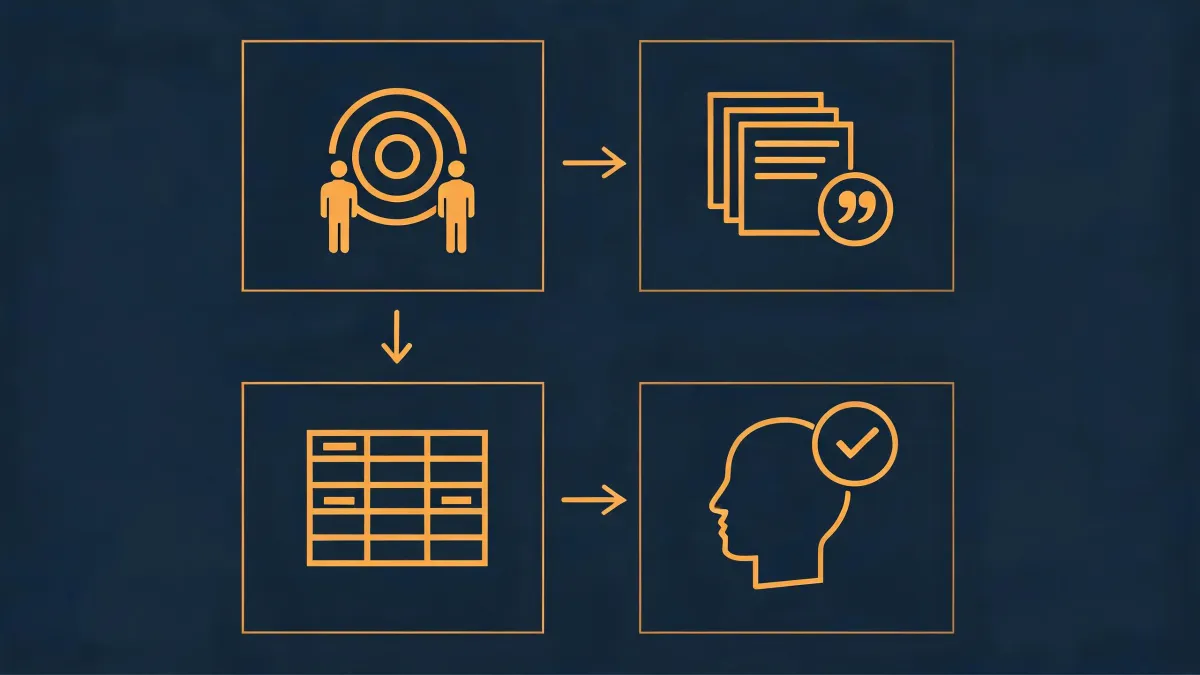
Here's a concrete workflow for a B2B sales team:
- Your SDRs build a target list in a spreadsheet from LinkedIn Sales Navigator or Google Maps.
- A Phantombuster agent enriches each row with public profile or company data.
- Make.com passes the output through a parser and dedupes known fields.
- A CRM record is created or updated with the enriched data.
What surprised me was that the extraction isn't the hard part. It's the enrichment logic—deciding which fields are worth keeping and how to map them to your CRM. We tracked 14 data points per account, and honestly, about four of them were duplicates we had to clean later. That's not unique to Phantombuster; it's true of any enrichment tool. The difference is that with automation, the dirty data gets into your CRM at high speed, so you need a schema before you press go.
What does data enrichment actually cost? (The TCO view)
This is my favorite question. The monthly subscription is only the visible cost. The total cost of ownership includes:
- Phantombuster usage units (based on executions, not just seats)
- Make.com operations per scenario run
- Data cleaning and deduplication—our biggest hidden cost
- Time spent debugging failed runs
- Compliance risk, which is hard to price but real
When I first built the cost model, I compared the cheapest Phantombuster plan to our SDRs' hourly time. It looked like a no-brainer. Then our first month's Make.com bill came in higher than forecast because I forgot to include the backfill of 8,000 accounts. (It's obvious in hindsight, but the burn still hurt.) I skipped reading the API rate limits because this was only a small backfill, and of course that was the run that hit a limit mid-import. That's a classic overconfidence failure.
So when you estimate, separate one-time backfill costs from steady-state costs. One-time backfill is where most cheap automation tools actually cost you money. Current pricing details are listed on Phantombuster's pricing page (https://www.phantombuster.com/pricing), but as of June 2025, I'd still verify with your rep because usage units change. If you're comparing vendors, don't ask what the monthly price is. Ask what 10,000 enriched records will cost in the first month, including data cleaning.
Should we use the API or the Make.com integration?
Probably a hybrid. For most B2B sales teams, the Make.com integration is the right starting point because it gets you a working enrichment flow without writing code. The API reference becomes useful when you need to trigger agents from a custom in-house tool or when you want to embed enrichment into a product.
When I compared the two approaches side by side, the difference was maintenance. The native integration required a couple of hours of setup; the custom API approach required writing and testing code, plus documenting it for the next person. Unless you already have an engineering resource, the API-only path is not worth the savings in connector fees.
If you ask me, API vs Make is the wrong frame. The real question is whether your team has the discipline to maintain the data flow. An API is a tool, not a data strategy. And yes, we did meet a consultant who built a scenario that called the API inside Make—it worked, but it was harder to maintain than the native module. To be fair, it solved a specific data transformation problem that the native module couldn't handle. That's the exception, not the rule.
What about LinkedIn compliance?
I'm not a lawyer, and you shouldn't take my word on this. What I can tell you is how we handled it: we read LinkedIn's Terms of Service ourselves, asked our legal counsel, and made a risk decision. Phantombuster doesn't promise LinkedIn compliance, and neither should you. Automated extraction from LinkedIn is a gray area, and the responsibility is on your team.
From a procurement viewpoint, that's not a reason to run away. It's a reason to include legal review and monitoring in your TCO. If you're a small team, the cost of a few hours of legal time is real, but it's often lower than you'd think. The bigger risk is using enriched data in a way that violates a platform's rules or privacy regulations.
If you build your workflow responsibly, keep humans in the loop for review, and document your sources, you're already doing more than most.